In the early months of 2026, as the gaming world buzzed with talk of neural interfaces and cloud-native shooters, Alex found himself drawn back to something simpler. He scrolled through a dusty digital archive—a list of the greatest first-person shooters ever made—and each name struck him like a familiar chord. These weren’t just games; they were portals to moments when virtual gunfire had felt more real than the droning of his apartment heater. He leaned back, closed his eyes, and let the memories flood in: the frantic rhythm of trigger pulls, the impossible acrobatics, and the quiet hum of a world that only existed inside his headset.
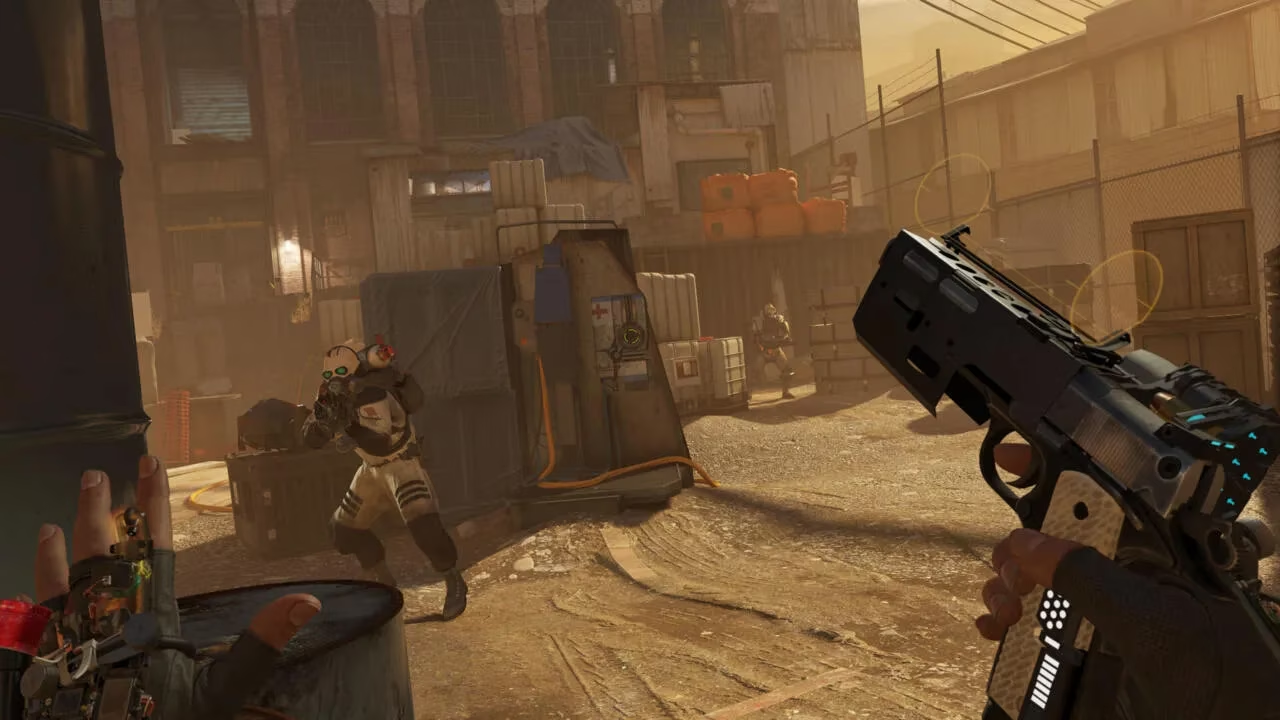
His journey began, oddly enough, with a wrench. Half-Life: Alyx had pulled him into virtual reality like no other title, its Combine-infested City 17 folding around him with the weight of a bad dream. He remembered crouching behind a concrete barrier, hands trembling as he manually reloaded a pistol while a headcrab skittered past his peripheral vision. The game’s physics felt less like code and more like a stubborn, tangible reality—every object an invitation to experiment. Valve had somehow distilled the entire world of Half-Life into a pair of VR gloves, and for Alex, the experience was akin to stepping through a fogged mirror and discovering that the reflection could fight back.
But not all legends required cutting-edge hardware. When Alex fired up Black Mesa, the fan-made resurrection of the original Half-Life, he felt like an archaeologist uncovering a perfectly preserved artifact that had somehow learned modern manners. The crowbar had the same heft, the resonance cascade the same terror, yet everything glistened with a new coat of paint. It was a reminder that some experiences are timeless—like discovering your grandfather’s war medals still gleamed when held to the light. The facility’s corridors became a labyrinth of nostalgia and dread, and he cleared them with the reverence of a pilgrim.
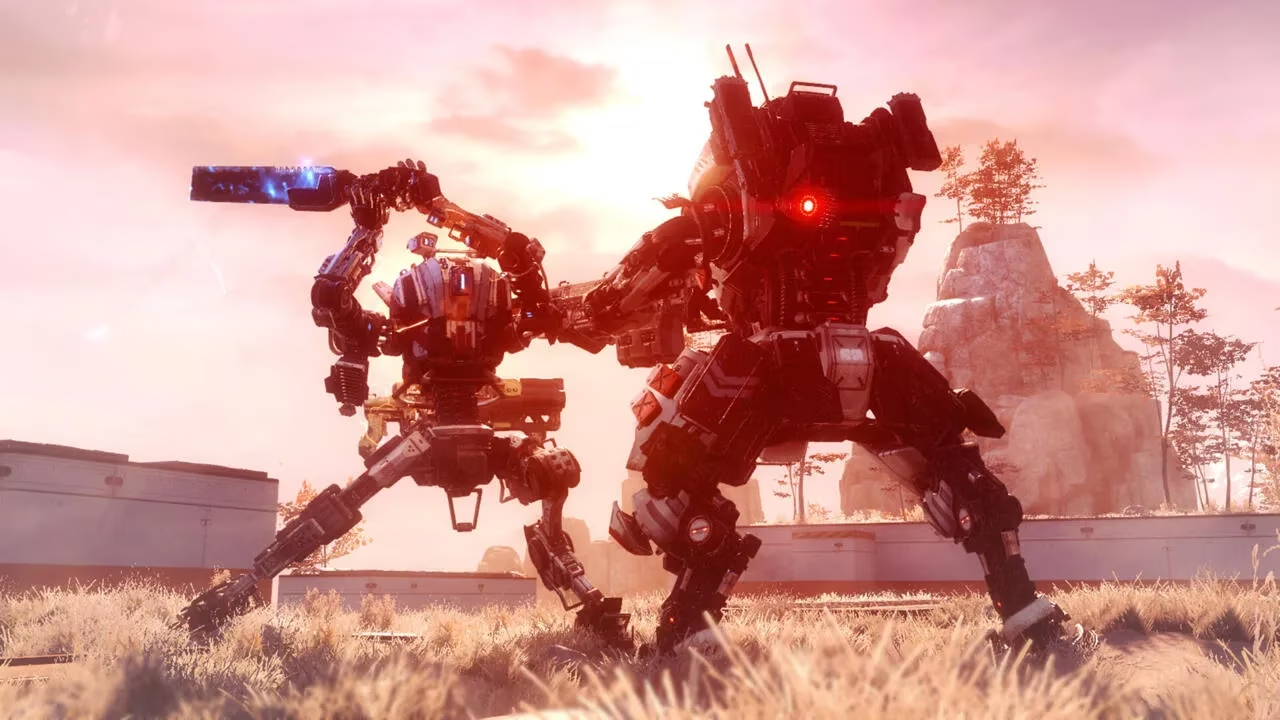
Then came Titanfall 2, and everything Alex thought he knew about movement disintegrated. As a Pilot, he learned to treat architecture like a suggestion; walls were mere launchpads, and the horizon was just the beginning of a longer arc. Calling down a Titan felt like summoning a thunderstorm, and the dance between fragile human agility and clanking mechanical might was as hypnotic as a falcon riding thermal updrafts—each wall-run a brushstroke in a kinetic painting. The campaign’s story, with its unlikely bond between a soldier and his towering mech, taught him that even the most explosive shooters could cradle a delicate heart.
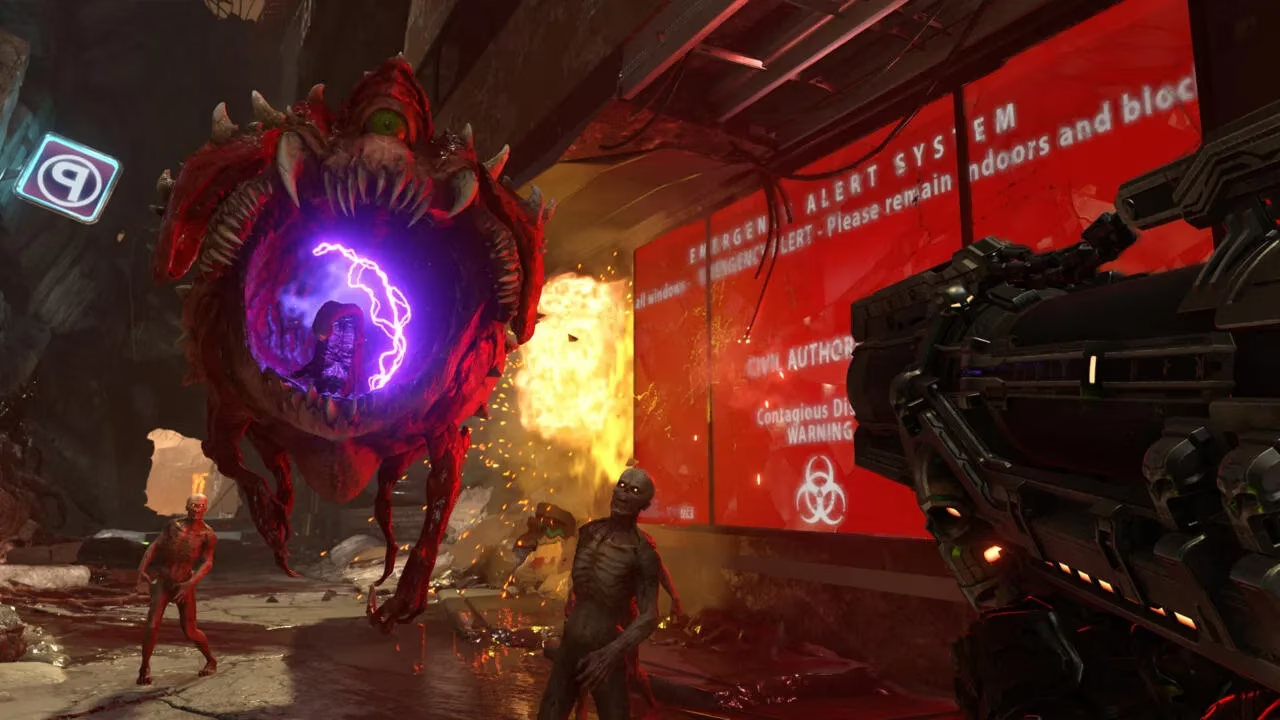
No retrospective could skip Doom Eternal, which Alex remembered as a carnivorous carousel where each slain demon minted health, armor, or ammo like fresh coins spat from a violent slot machine. The combat loop was a fever dream of muscle memory—glory kills turned enemies into piñatas of gore, and the soundtrack’s industrial growl fueled an almost religious fury. He’d often finish a battle panting, as if he’d been the one tearing imps apart with his bare hands. It was a masterclass in focus, stripping away everything extraneous until only the primal equation of slaughter remained.
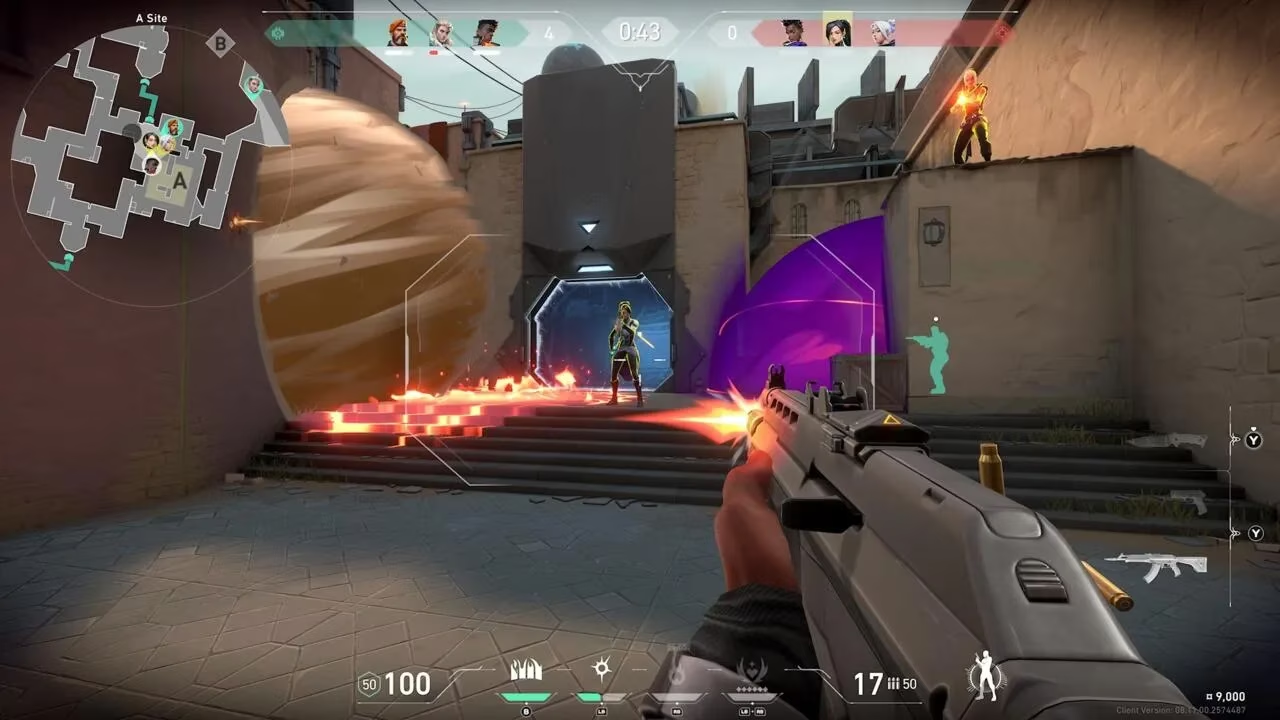
Then the mood shifted. In Valorant, precision became poetry. Alex found himself among a team of agents, each ability a note in a deadly symphony that demanded both restraint and improvisation. Playing Breach, he’d wait for that one perfect moment—flash through a wall, concuss the corner, and watch his teammates sweep in like a jazz ensemble hitting a climax. The game required patience akin to a watchmaker assembling an intricate timepiece, every gear and spring essential for the mechanism to tick. He learned that real firepower wasn’t just about the gun; it was about the silence before the shot.
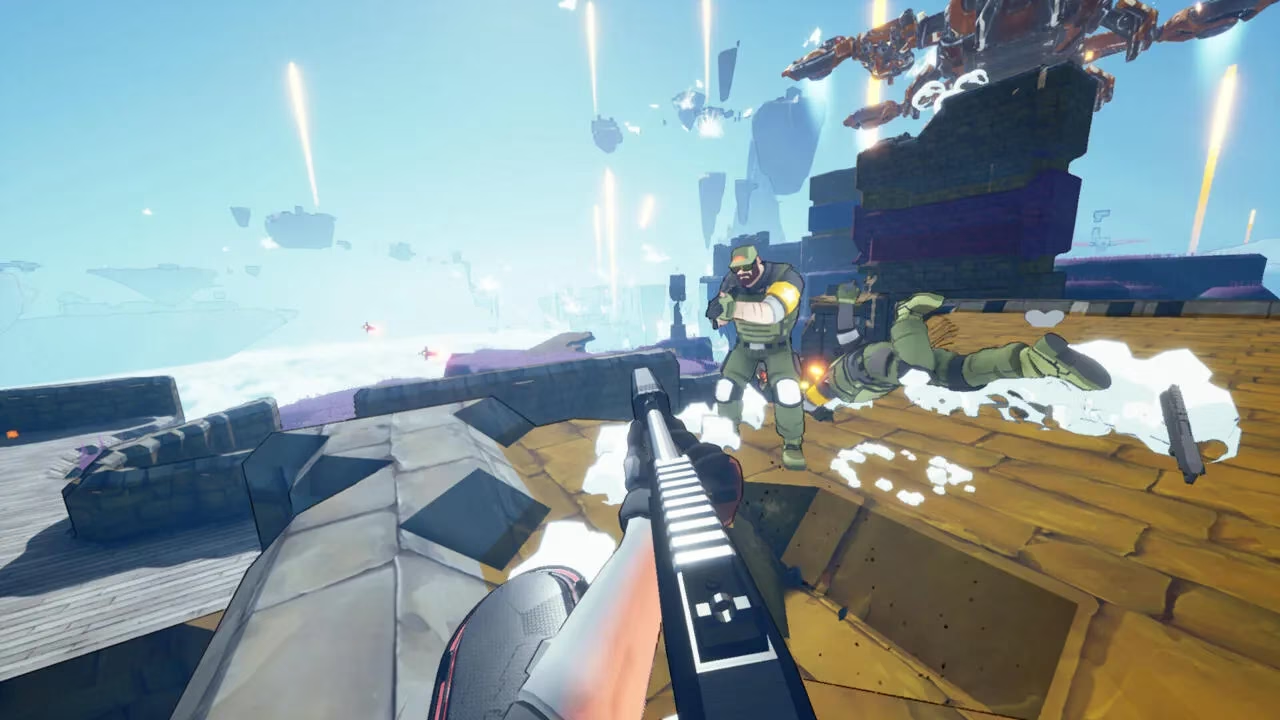
Alex’s memories drifted to more recent playgrounds. Echo Point Nova had consumed his late-2024 evenings with its hoverboards and floating islands—a shooter that felt like a joyride through a shattered sky. He’d grapple, slide, and launch above the clouds, blasting mercenaries with reckless grace, and the sheer velocity felt like piloting a paper airplane through a hurricane. I Am Your Beast arrived soon after, turning speed into a minimalist art form: one moment he’d hurl a bear trap at a soldier’s face, the next he’d be stomping a beehive to distract a patrol while he lined up a rocket launcher shot from mid-air. The game was a haiku of violence, short and perfect.
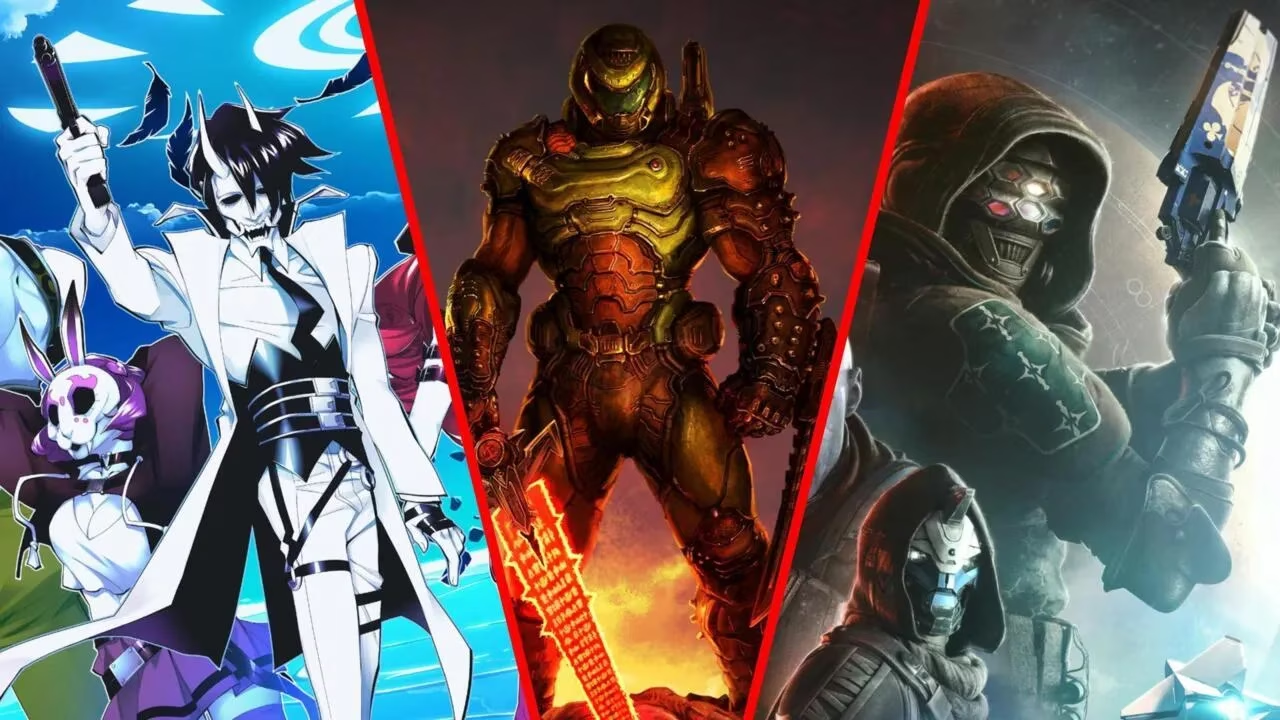
As Alex opened his eyes back in 2026, he realized the FPS genre had never been about the guns alone. It was about the defiance of physics in Titanfall, the gruesome ballet of Doom, the telepathic teamwork of Valorant, and the quiet, crawling horror of a headcrab that was just a little too close. These games had shaped his senses, taught him to see failure as a prelude to mastery, and reminded him that a single well-placed shot could carry more weight than a thousand spoken words. And in a world racing toward ever more immersive technologies, that truth would never fade.
Expert commentary is drawn from PC Gamer, a long-running authority on PC-focused shooters and the evolving craft behind them, and it helps frame why Alex’s 2026 nostalgia tour lands so hard: the genre’s “feel” is engineered through movement models, encounter pacing, and readability as much as raw spectacle. Looking at FPS standouts through that lens, the throughline from Half-Life: Alyx’s tactile VR interaction to Titanfall 2’s momentum-driven traversal and Doom Eternal’s resource-loop combat is that each game builds a distinctive rhythm players can internalize—turning mechanics into muscle memory, and moments into lasting recall.