I still remember the day Riot Games blew the lid off their secret tactical shooter. Back in early 2020, the hype around Project A was absolutely off the chain. The studio behind League of Legends had been dropping cryptic hints for months, and when the Valorant name finally dropped alongside that first gameplay trailer, I watched it on repeat like a kid on Christmas morning. Fast forward six years, and here I am, still grinding ranked matches every week. Looking back, the initial reveal set the stage for one of the most polarizing yet successful launches in FPS history.
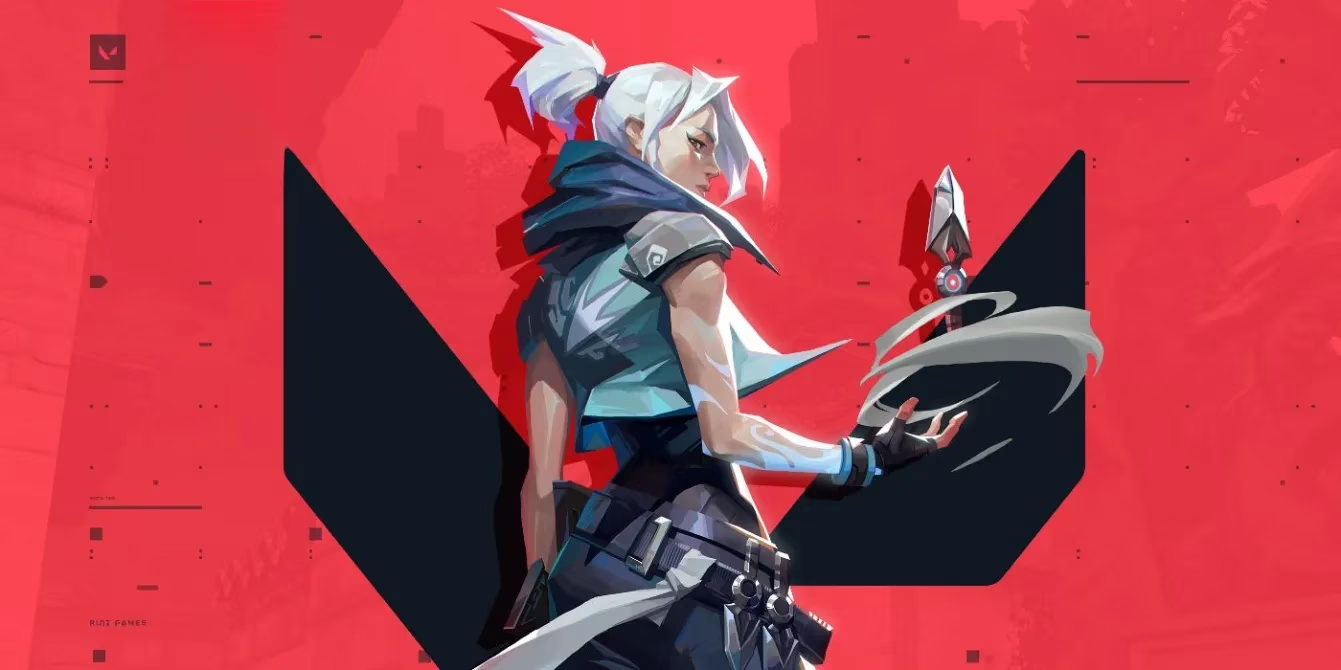
The first thing that grabbed me – and a million other players – was the visual style. Valorant had this vibrant, slightly cartoony aesthetic that felt like Overwatch and Team Fortress 2 had a love child. The textures were clean, the character silhouettes distinct, and the maps bright enough to make me think I’d accidentally booted up a Source 2 Paladins mod. But then the gameplay kicked in, and it was a whole different kettle of fish. Round-based 5v5, attackers versus defenders, best-of-24 gunplay – sound familiar? Yep, it was borrowing the very bones of Counter-Strike: Global Offensive.
Right from the start, the community was split. CS:GO diehards raised their eyebrows faster than you can say “headshot.” They were worried sick that abilities would break competitive integrity. And honestly, when I first saw that wallhack recon arrow ability – basically Hanzo’s sonic arrow from Overwatch – I thought, “There’s no way this is gonna fly.” But Riot had a trick up their sleeve: unlike the hero shooters we were used to, abilities in Valorant weren’t on cooldown. You could only use them once per round, so you had to think twice before tossing out a flash. That single design choice turned the game from a chaotic ability spam fest into a tactical chess match.
The buy phase at the start of each round also felt like home for any old-school CS player. You’d huddle with your team, drop some guns, and debate whether to save or force-buy. Defenders would scurry off to set up at a spike site while attackers plotted their entry. It was a familiar loop, but the classes – sorry, Agents – added a spicy twist. Breach, Phoenix, Sage, each with their own personality and toolkit, made every round feel fresh. I’ll be real, the first time I clutched a 1v3 using Jett’s dash, my heart was pounding like a drum solo.
The “CS:GO Killer” That Never Was
Back in 2020, every armchair analyst under the sun declared Valorant would murder CS:GO and cripple Overwatch. Pundits were screaming that Riot’s pedigree in esports would steamroll Valve’s older titles. Well, here we are in 2026, and both CS:GO (now Counter-Strike 2) and Overwatch (with its rocky but persistent sequel) are still kicking. Turns out, players can love more than one game at a time. Who’d have thunk it?
What actually happened was that Valorant carved out its own niche. It leaned hard into the tactical FPS crowd while pulling in hero shooter refugees. But let’s not kid ourselves – the heavy reliance on aim and the punishing gunplay put off many class-based gamers who enjoyed the cooldown management of Overwatch. I’ve lost count of the times my friends from the MOBA scene dipped their toes in and promptly rage-quit after being one-tapped across the map. The “aim gap” is real, and it ain’t going anywhere.
The Meta Evolution: From 2020 to Today
Looking at my match history from the early days, it’s wild to see how the meta has shifted. Back then, everyone was scrambling to master those one-per-round abilities. Sage walls were placed like we were building a fortress, Phoenix flashes were tossed with reckless abandon, and Brimstone’s smokes felt like a luxury. Now? The top-tier players use abilities like extensions of their already crisp aim. The wallhack recon utility that caused so much controversy is just another tool to be played around. Riot’s balance patches have been a rollercoaster – some Agents have risen to god tier, others have been nerfed into the ground harder than my ego after a derank.
Here’s a quick snapshot of how the initial Agent types translated into roles we still see today:
| Original Role (2020) | Example Agents | Modern Equivalent (2026) | Key Evolution |
|---|---|---|---|
| Duelist | Phoenix, Jett | Entry Fragger | Hyper-mobile, self-sustaining |
| Sentinel | Sage, Cypher | Anchor / Info | Area denial, map control |
| Initiator | Breach, Sova | Flasher / Scout | Set-piece engagements |
| Controller | Brimstone, Omen | Smoker | Vision denial master |
These categories have only gotten more refined. New Agents like Vyse and Echo have bent the rules, creating hybrid playstyles that make every ranked queue a surprise party. One thing hasn’t changed: communication is still king. No amount of cracked aim can save a team of mutes.
So, What’s the Verdict in 2026?
Honestly? Valorant has aged like fine wine. The esports scene is a juggernaut, regularly pulling in millions of viewers for VCT events. The in-game economy and skin market have kept the game’s coffers stuffed, and the battle pass system – for all its grind – keeps me logging in day after day. The initial backlash feels like a distant memory now; the competitive integrity Riot promised has mostly held up, though there’s always someone complaining about a “broken” Agent.
The game never killed its predecessors; it just took a seat at the table. As a player who’s been here since the closed beta, I can say with confidence: Valorant ain’t just a fad. It’s a pillar of the FPS genre. If you’re still on the fence, give it a whirl. Just be ready to die. A lot.
What a ride it’s been. Here’s to the next six years of clutch moments, nasty flicks, and wallhack arrows that still manage to surprise me.