Six years have passed since the world first heard the words “You’re locked in here with me,” and yet the memory of April 7, 2020 still makes veteran players chuckle into their gun buddies. Back then, Valorant wasn’t the globe-dominating tactical shooter it is today – it was a closed beta shrouded in mystery, hyped to the moon by Twitch drops, pandemic-era desperation, and the sheer audacity of Riot Games releasing something that wasn’t League of Legends. It was a beautifully chaotic time.
The Year of the Great Refresh Button Massacre
The story of Valorant’s birth reads like a fairy tale for anyone who enjoys tactical shooters and controlled amounts of FOMO. The closed beta arrived in an era when the entire planet was stuck indoors, doom-scrolling and inventing new banana bread recipes. Riot, in its infinite wisdom, decided access would be granted through linked Riot and Twitch accounts – meaning millions of hopefuls left streams running in the background while pretending to work from home. It wasn’t just “watching streams,” it was a full-blown esports lottery. Canada, the United States, Europe, Russia, and Turkey got first dibs, while the rest of the world gnashed their teeth and settled for highlight clips. Players who snagged a drop felt like they’d won an Olympic medal; the unlucky ones perfected the art of complaining about RNG on Reddit.
Riot was refreshingly transparent about how COVID-19 had crimped the rollout. Back then, “global launch” was a phrase whispered only in dreams. The company openly admitted that further regions would have to wait if restrictions persisted. Fast forward to 2026, and those early regional limitations are a distant joke. The game now lives on every platform imaginable – yes, even the mobile version has its own esports scene that makes 2020’s Twitch hysteria look quaint.
The Frankenstein That Became a Star
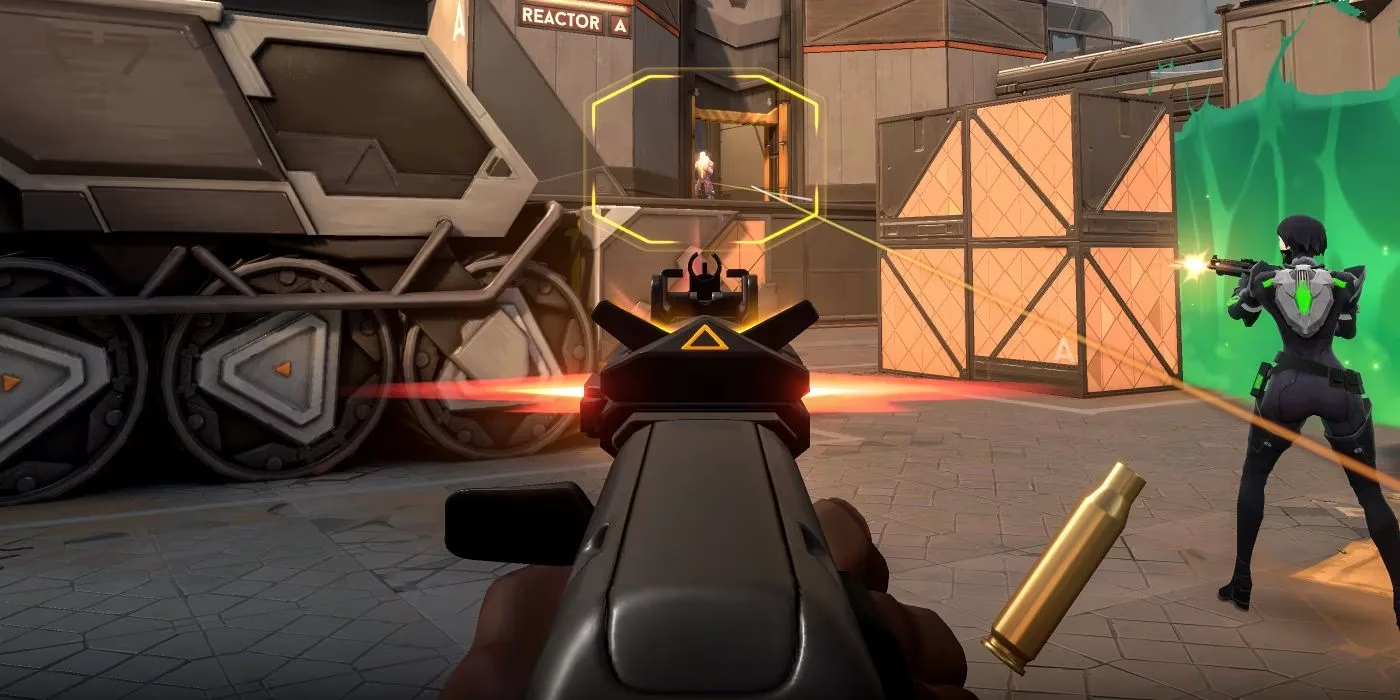
When Valorant was announced as Project A during Riot’s ten-year anniversary celebration, skeptics called it a Frankenstein’s monster of Overwatch’s agent-based heroics and Counter-Strike’s precise gunplay. The initial response was, to put it politely, lukewarm. “Abilities? In my tac shooter?” cried the purists. But then pro players from CS:GO, Overwatch, and even Fortnite got their hands on the alpha, and the narrative flipped like a well-timed Jett dash. Suddenly, praise was pouring in. The gunplay felt crisp, the map design rewarded cleverness over twitch reflexes, and the agents – oh, those agents – each had enough personality to make players pick fights over instalocking weeks before Vanguard even existed.
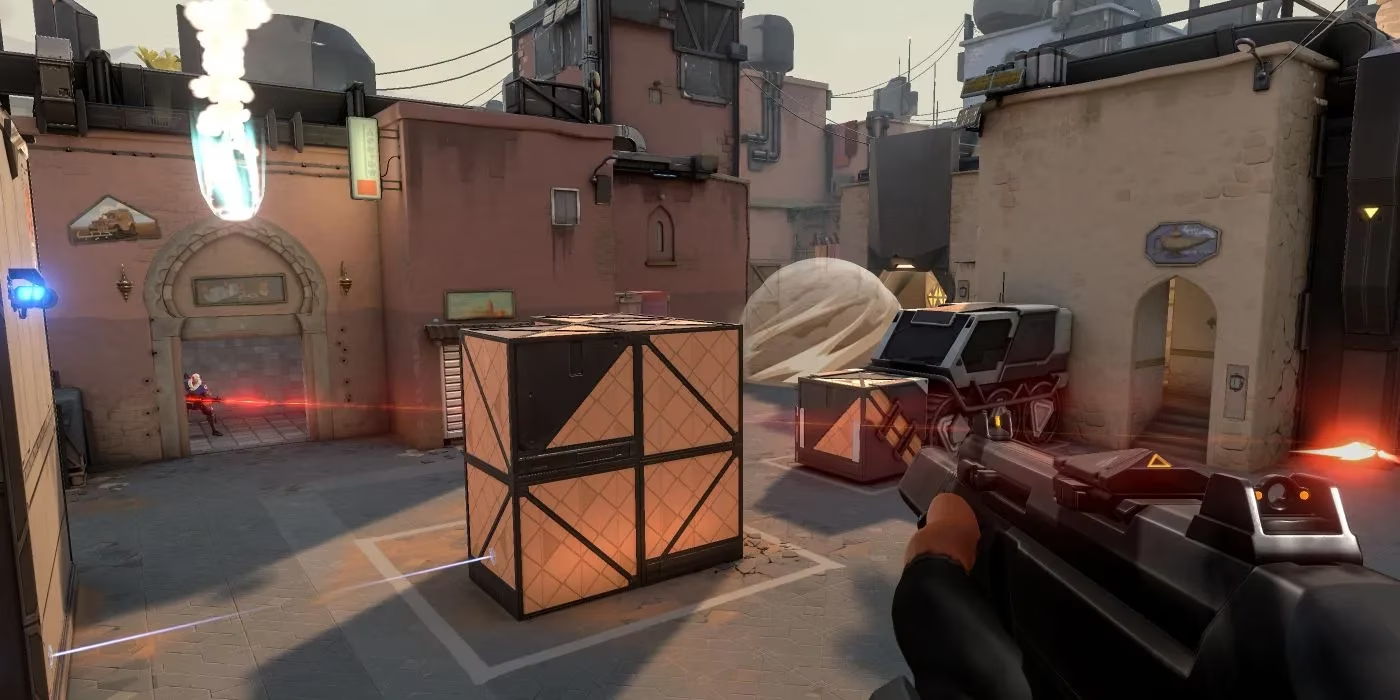
The closed beta launched with only a handful of agents and maps, but the drip-feed of new characters via the official Valorant Twitter page kept the hype simmering. Sage’s ice walls were already terrorizing corridors, Brimstone’s smokes changed the geometry of gunfights, and someone, somewhere, was already perfecting the art of Raze’s double satchel jumps. It was messy, unbalanced, and absolutely glorious.
From Drop Hype to Dominance
What no one predicted in 2020 was how quickly Valorant would cement itself as a pillar of competitive gaming. By mid-2020, an open beta arrived and the player count exploded. Riot didn’t just release a shooter; they released a lifestyle. Skin bundles became events. Battle passes became must-haves. The VCT (Valorant Champions Tour) blossomed into the kind of grand spectacle where fans argue about franchised rosters as if they’re discussing royal lineages. And the agent pool? It has ballooned to a point where picking a main requires a spreadsheet and a therapist.
The Twitch drop system that launched Valorant into the stratosphere is now studied in marketing textbooks. It turned viewer retention into a sport. Players even joked that leaving a stream on while sleeping was the most productive thing they did all lockdown. Those early streamers – the ones who were “whitelisted” for the beta – now sit as elder statesmen of the community, reminiscing about the days when nobody knew how to counter a well-placed Cypher tripwire.
A Nostalgic Glance at the Future
Now, in 2026, logging into Valorant feels like visiting a city that grew from a tiny village overnight. The UI has been polished more times than a platinum player’s aim training routine. The lore has deepened, with cinematics that make grown adults weep. New movement mechanics and map reworks keep the meta fresh. The dreaded “Raze ult” sound still induces panic sweats, and the eternal debate over which Phantom skin has the best sound just keeps on giving.
The closed beta of April 2020 was more than a test phase – it was a cultural moment. It united a global community in lockdown and gave rise to memes that still circulate in Discord servers. So here’s to the ones who watched ten hours of streams for a single drop, to the Europeans who woke up at ungodly hours, and to the VPN warriors who tried (and mostly failed) to trick the system. You laid the foundation for the tactical shooter colossus we know today. And honestly, it’s still better than banana bread.