As a seasoned Valorant player who has navigated countless meta shifts, I can confidently say that understanding the core strengths of each agent remains the bedrock of victory. While new agents have entered the fray since the game's early days, the foundational principle that a well-rounded team composition is key—whether for a decisive spike plant or an impenetrable defense—has never been more relevant. In the tactical landscape of 2025, certain classic agents have evolved into timeless pillars of strategy, and among them stands Killjoy, the German sentinel whose mechanical genius can single-handedly dictate the flow of a round.
To me, mastering Killjoy is like conducting a silent, automated orchestra; each gadget is an instrument placed with precision, waiting for the cue to unleash a symphony of disruption. Her core arsenal remains a formidable toolkit for area denial: an Alarmbot, a Turret, and two Nanoswarm grenades. On most maps, this allows her to lockdown an entire bombsite autonomously, though a coordinated enemy push always warrants having teammates nearby for support. The true art lies in strategic placement. Her Turret acts as a vigilant, unblinking sentinel, immediately spotting and suppressing any enemy that dares enter its line of fire, alerting your team to their presence. This is crucial for gathering early information. Similarly, her Alarmbot is your best insurance policy against flanks, a hidden tripwire that debuffs and reveals sneaky opponents. Remember, you can recall and redeploy both the Turret and Alarmbot, but a 20-second cooldown punishes hasty decisions, so initial placement is critical.
Her Nanoswarm grenades are the hidden vipers in the grass, lying dormant until you choose to strike. On defense, they shine by punishing predictable spike plants. If you know the common plant spots—and you should—pre-placing a Nanoswarm can force carriers into vulnerable, suboptimal locations or inflict substantial damage if they commit. On a map like Haven, Killjoy's strength is her ability to defend an expansive area with her wide-radius utilities. You can, for instance, place the Turret in Garage to cover a mid-push and tuck the Alarmbot down C Long, effectively monitoring two critical pathways simultaneously. This lets her stretch her influence thin across the map like a spider weaving a web of steel and circuitry, without sacrificing effectiveness on key chokepoints.
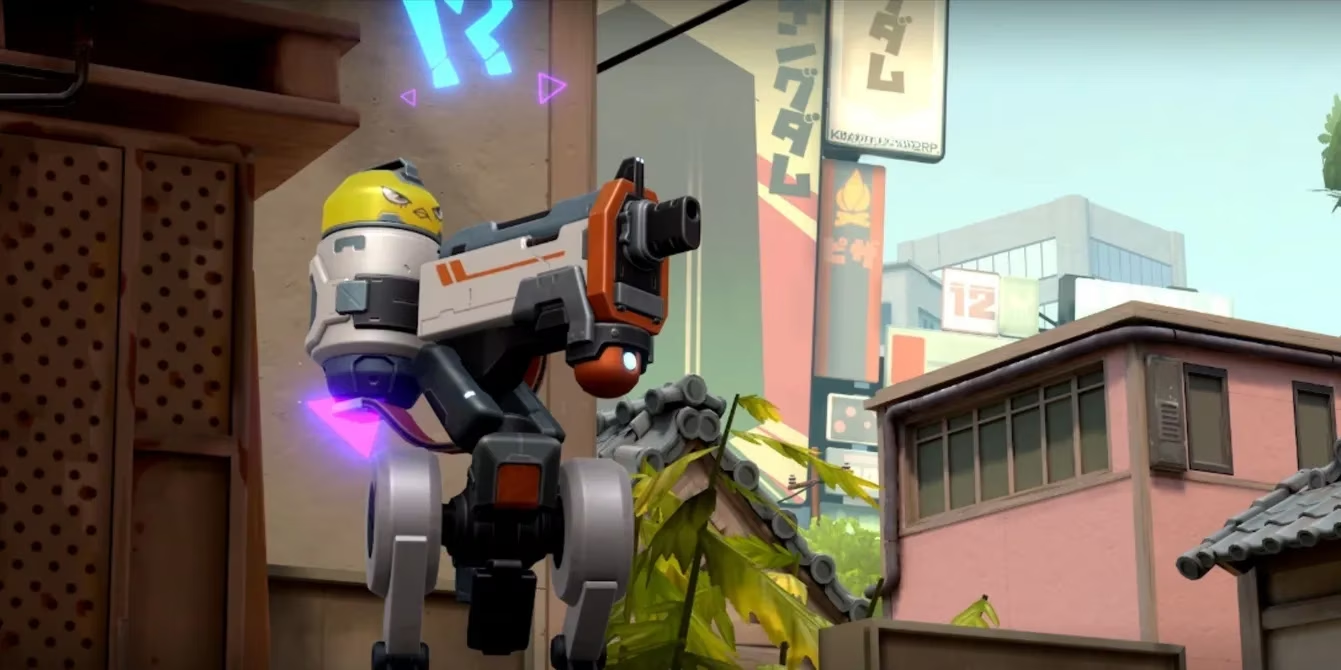
While Killjoy's heart belongs to defense, a clever player knows her tools have sharp offensive edges. Her Nanoswarm grenades transform into one of the best post-plant abilities in the game. The primary goal is spike control, not frags. After planting, lob one or both Nanoswarms directly onto the spike. The beauty is that you can detonate them from virtually anywhere on the map, as long as you have a semblance of line-of-sight. Wait for the telltale defuse sound or until the timer is critical, then activate. The resulting damage zone will forcefully eject any defuser, buying precious seconds for the spike to explode. It's a simple yet devastatingly effective tactic.
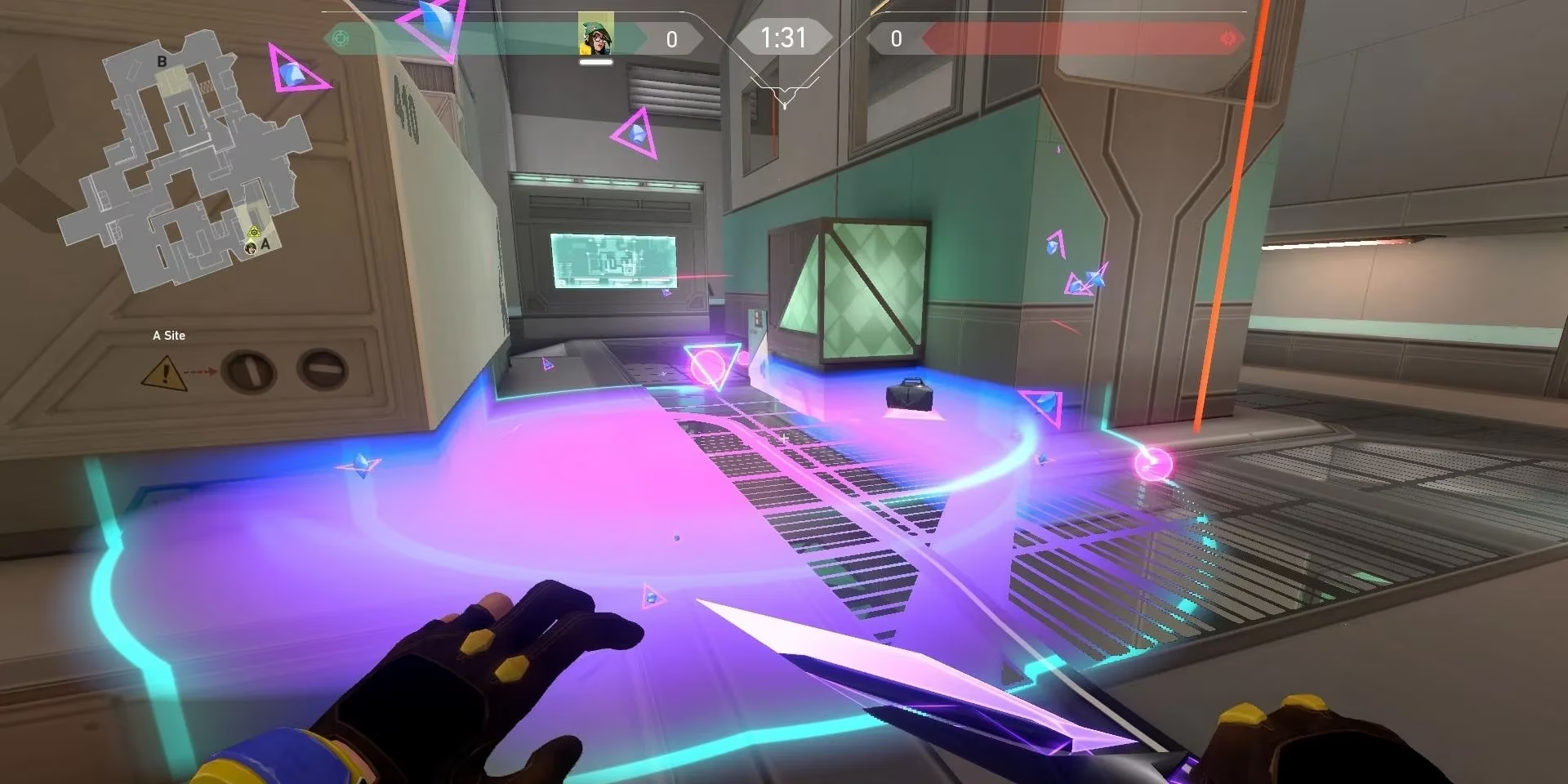
Then there's her pièce de résistance: Lockdown. This ultimate is a game-changer on both sides of the round. Upon activation, it deploys a device that projects a massive 30-meter dome. Enemies caught inside when it finishes its 13.5-second charge are detained and slowed for a punishing eight seconds. On attack, using Lockdown to initiate a site hit is like dropping a sonic boom that clears the room; defenders will almost always retreat to avoid detention, granting your team free entry for the plant. On defense, it can forcibly clear enemies off a planted spike, creating a window for a risky defuse. However, its weakness is its transparency: the enemy always knows the device is the epicenter and may rush to destroy it before it activates. Agents like Brimstone or Sova can also use their ultimates to snipe it from safety. Furthermore, using it potentially reveals your location, so be prepared for aggressive peeks from enemies looking to capitalize.

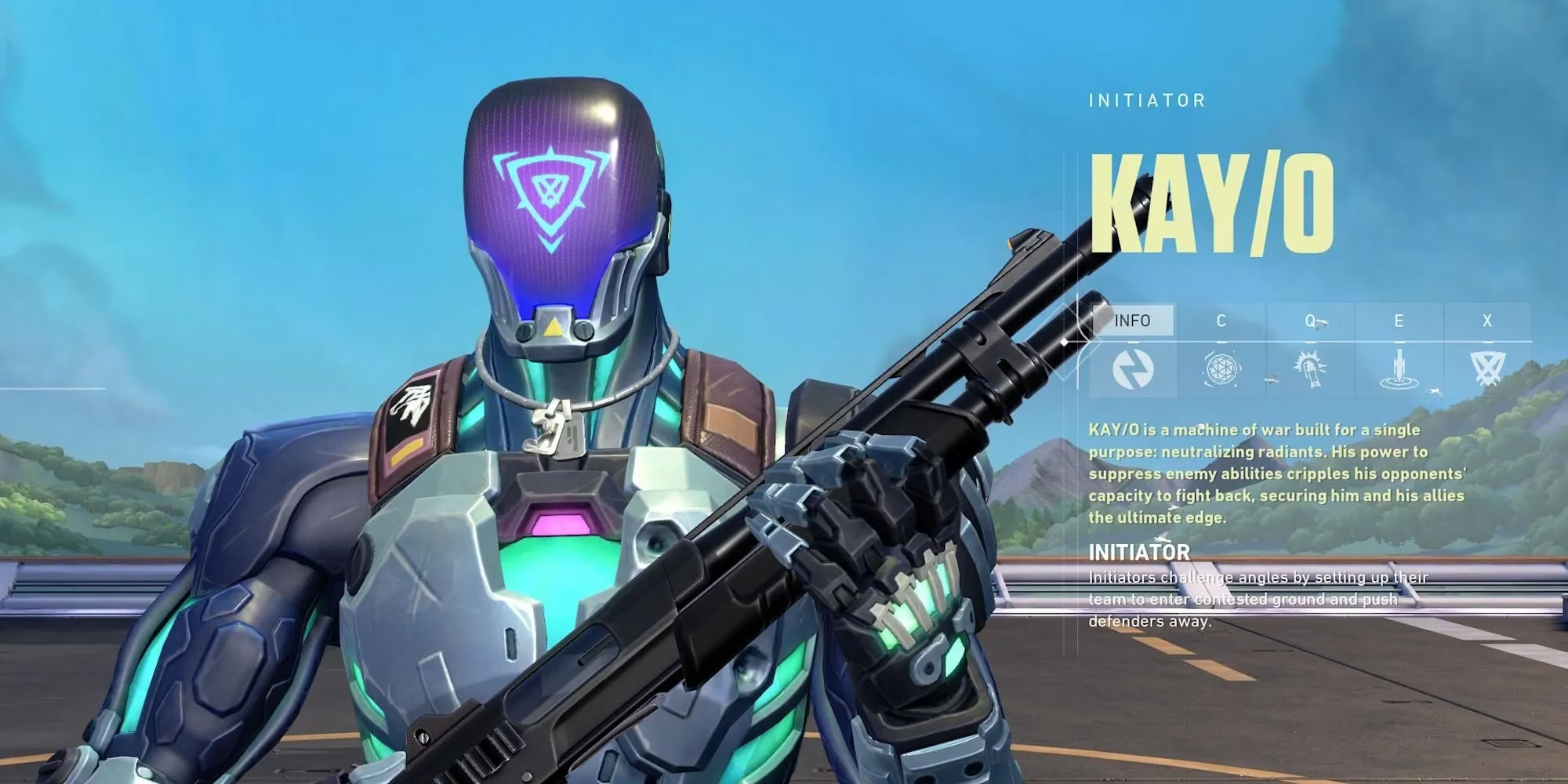
In the current meta, no discussion of Killjoy is complete without addressing her natural counter. Kay/O remains the perfect nemesis for our German engineer. His Zero/Point suppression blade can silently neutralize all of Killjoy's active gadgets within its radius. This is catastrophic because, unlike when devices are shot, Killjoy receives no notification. Her once-secure site can become a ghost town of deactivated tech, allowing a silent enemy advance. The blade can be shot down, but the initial ping still gives the enemy team information. If you suspect a Kay/O is on the prowl, the counterplay is to play close to your Turret and other gadgets. If his blade flies in, you must be ready to reactivate them manually the moment suppression wears off. This severely limits your mobility, turning you into a stationary guardian, but it's a necessary sacrifice to maintain your automated defense.
To sum up, here is a quick-reference table for maximizing Killjoy's impact in 2025:
| Situation | Key Ability | Optimal Use |
|---|---|---|
| Default Defense | Turret & Alarmbot | Place on common entry points/flank routes for early info and suppression. |
| Predicting a Plant | Nanoswarm | Pre-place in common spike plant spots to deny area or inflict damage. |
| Post-Plant Scenario | Nanoswarm | Place on spike; detonate on defuse sound to secure round. |
| Site Execute (Attack) | Lockdown | Deploy to clear defenders off site for a free plant. |
| Retake (Defense) | Lockdown | Use to force attackers away from a planted spike. |
| Against Kay/O | All Gadgets | Play nearby to manually reactivate them after suppression. |
Mastering Killjoy is about foresight and patience. She is not a duelist seeking flashy kills; she is a strategist who wins rounds through meticulous preparation and controlled chaos. By treating her gadgets not as simple traps but as interconnected nodes in a defensive network, you can become the immovable object that every attacking team fears. In 2025, her role as the quintessential area-denial sentinel is more solidified than ever, proving that sometimes, the best offense is a perfectly automated defense.