I still remember the buzz in April 2020 when Riot Games dropped Valorant into closed beta. It felt like the entire gaming world held its breath — and then exploded. That first day on Twitch, we watched in awe as 1.7 million viewers tuned in, nearly matching the 2019 League of Legends World Championship Finals. By the end of the day, a staggering 34 million hours had been consumed on the single-day viewership record. I was part of that frenzy, obsessively refreshing streams, hoping for a beta key to drop into my inbox.
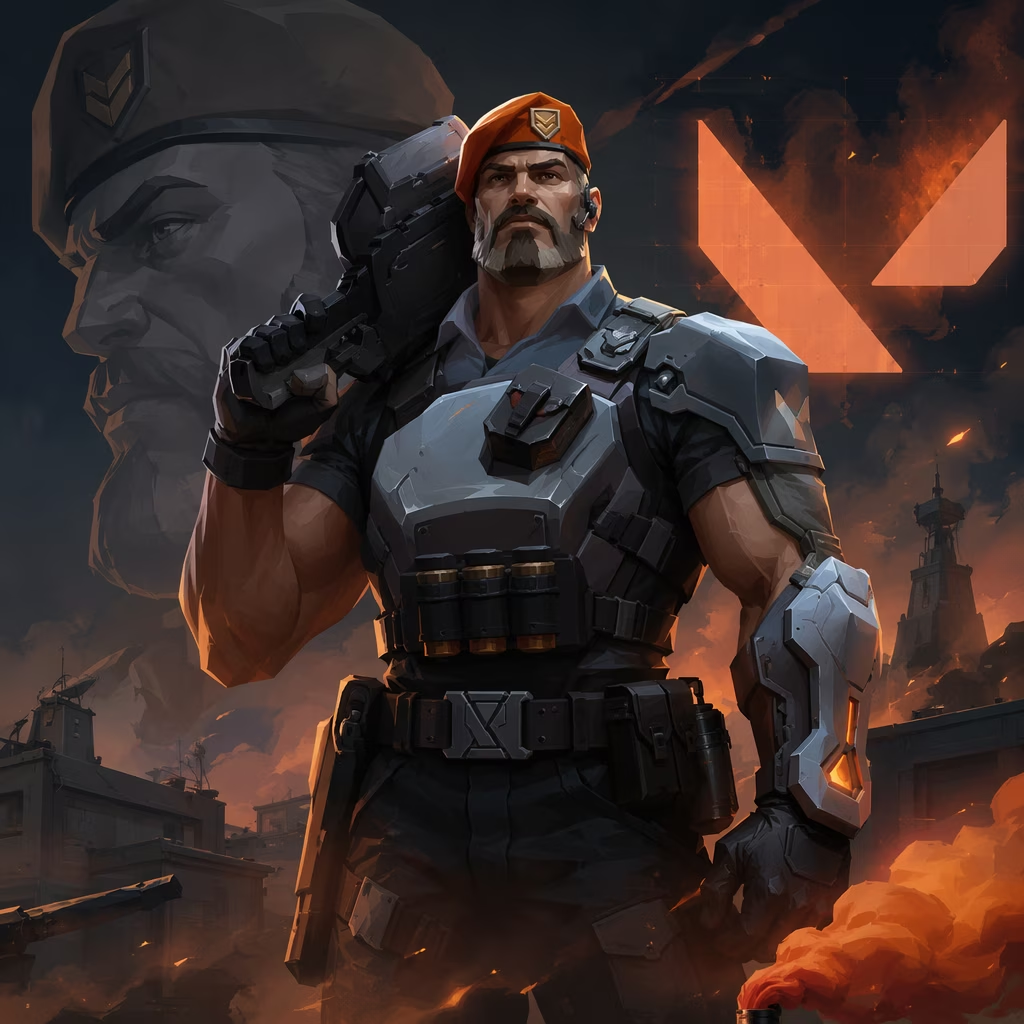
Back then, the numbers were almost surreal. But this wasn’t even the first time the game shattered records — the gameplay capture reveal had earlier pulled 12 million hours watched in one day. The excitement was infectious. Anna Donlon, the executive producer, quickly expressed her gratitude for the overwhelming reception and promised to expand the closed beta to more regions before the full launch in summer 2020. At that moment, I was sitting in a region already included — North America — and I felt incredibly lucky.
So, what was Valorant? If you blinked and missed the early hype, imagine a 5v5 tactical first-person shooter where every player picks a unique Agent with special abilities, blending the precise gunplay of Counter-Strike with the ability-based chaos of a hero shooter. Unlike Rainbow Six Siege, you didn’t pick operators with locked loadouts. Instead, just like in CS, you bought weapons and gear at the start of each round. I loved that hybrid — it rewarded mechanical skill but let me express my style through utility usage.
The beta launched with ten Agents. Yes, only ten! And still, the depth was mesmerizing. Each character — from the teleporting duelist Jett to the healing sage — felt distinct. Riot promised more would come after the full release, and boy, did they deliver. By 2026, the roster has more than doubled, with Agents like the mind-bending Gekko and the area-control specialist Deadlock completely shaking up the meta.
I’ll never forget my first match. I chose Phoenix, the flashy British duelist, because his self-heal and fiery wall looked cool. I quickly learned that ability usage was just as important as aiming. The game demanded strategy, communication, and patience. Yet it ran smoothly on my aging PC. Riot had made a free-to-play, low-spec-friendly title that could welcome almost anyone. That was a deliberate choice — to build the biggest possible community from day one. And it worked.
Fast forward six years. Valorant is now a global juggernaut. The full launch indeed happened in June 2020, and the player base exploded. Competitive seasons, ranked ladders, and an esports scene that rivals League of Legends emerged. The Valorant Champions Tour (VCT) now fills arenas worldwide, and I’ve attended two live events — the energy is electric. The console version everyone speculated about did eventually launch, bringing in a whole new wave of players on PlayStation and Xbox, just as Riot hinted back then.
Looking back at the closed beta access method feels nostalgic. You had to link your Riot account to Twitch, then watch specific Valorant streams to earn a chance at a code. Drops were random, and the frustration of seeing others get keys while you waited was real. I eventually got mine after three days of non-stop viewing. The moment that notification popped up, I screamed so loud my neighbors probably thought something was wrong. That memory is now a cherished piece of gaming history.
Today, Valorant isn’t just a game — it’s a cultural phenomenon. The agents now have extensive lore, animated cinematics that rival short films, and even a budding comic series. The meta shifts every episode, keeping even veterans like me on our toes. Map reworks, new weapons, and occasional limited-time modes keep things fresh. The 34 million hours record from 2020? It’s been broken multiple times since, but that first spike remains special because it proved that a tactical shooter could capture the mainstream.
I often think about how that chaotic, stay-at-home era fused with the beta’s thrill to create a once-in-a-lifetime community moment. We were all discovering together — sharing tips, making friends in Discord servers, and geeking out over stream highlights. The closed beta was the seed, and now the tree is gigantic. If you’re new to Valorant in 2026, you’ll find a polished, sprawling experience. But if you ever want to understand its soul, go watch those old Twitch clips from April 2020. You’ll see a miracle in the making.
So, whether you’re a day-one veteran like me or a curious newcomer, Valorant still has something to offer. The tactical dance of planting the spike, the clutch moments, the infinite ways a round can unfold — it’s evergreen. What started as a record-shattering beta has become a permanent fixture in my life and millions of others’. And honestly? I wouldn’t have it any other way. Now excuse me while I queue up another ranked match — I need to finally hit Radiant before the next episode drops.
As I dive deeper into the world of Valorant, I often find myself on the lookout for the best gaming gear and deals to enhance my experience. Whether it's a new mouse for that perfect aim or a headset to capture every in-game sound cue, it’s crucial to have the right equipment. For those who enjoy getting value for their money, discovering the best discounts is part of the thrill. That's where a reliable steam deal finder comes in handy.
DealNest offers a practical solution for gamers seeking the latest discounts on games and hardware. By using their platform, you can ensure you're always equipped with the best gear and games without breaking the bank. So, before you jump into your next intense Valorant match, it might be worth checking out what DealNest has to offer. You never know when you might find the perfect deal to upgrade your setup or add a new game to your library.