I remember the closed beta of Rogue Company arriving in 2020 like a deckhand trying to board a ship already crowded with captains. That summer had already delivered Valorant and Rocket Arena, and here came another hero-shooter, a third-person cocktail of Counter-Strike and Overwatch. By 2026, my memories of those early PC and Xbox One sessions have settled into something like an old mixtape: a handful of brilliant tracks, a few awkward skips, and a mood I still respect.
At the time, the most valuable thing Rogue Company did was fill a console-shaped hole. PC players already had CS:GO and, later, Valorant to satisfy the round-based tactical itch. Console players, especially on Switch, had almost nothing comparable. Rogue Company delivered that loop from a third-person view with abilities attached, and even if the idea was not original, it tasted like cold water in a room where everyone else was sipping warm soda. That platform gap mattered more than novelty, and it earned the game a push in Nintendo Directs even if I could not test the Switch version myself; I suspected it would be nearly identical with a visual downgrade.
Testing both PC and Xbox One exposed a lopsided duel. Mouse aiming made PC feel like drawing with a freshly sharpened pencil, while controller players in long-range fights were left trying to thread a needle while wearing oven mitts. The closed beta forced cross-play with no off switch, so console users often entered matches carrying invisible ankle weights while PC users wore track spikes. Cross-progression was mentioned for launch, but in the beta my PC and Xbox unlocks remained separate like bookshelves in two different rooms.

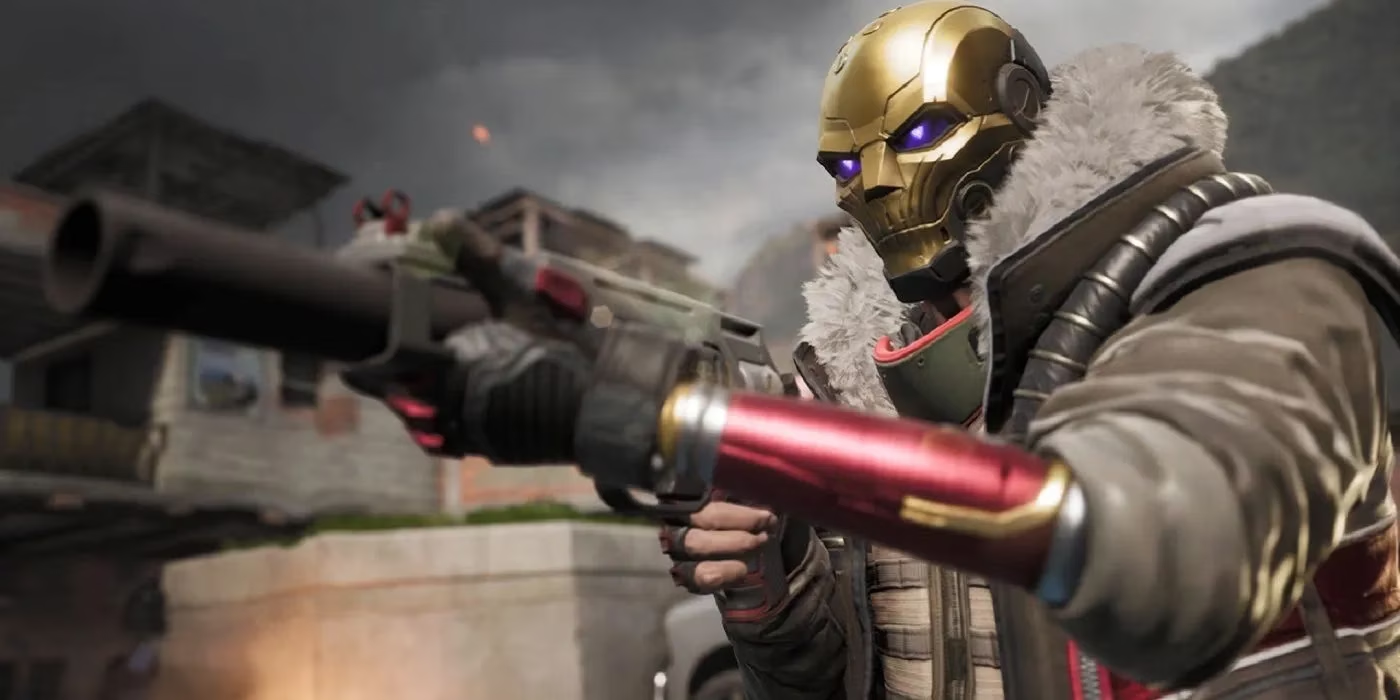
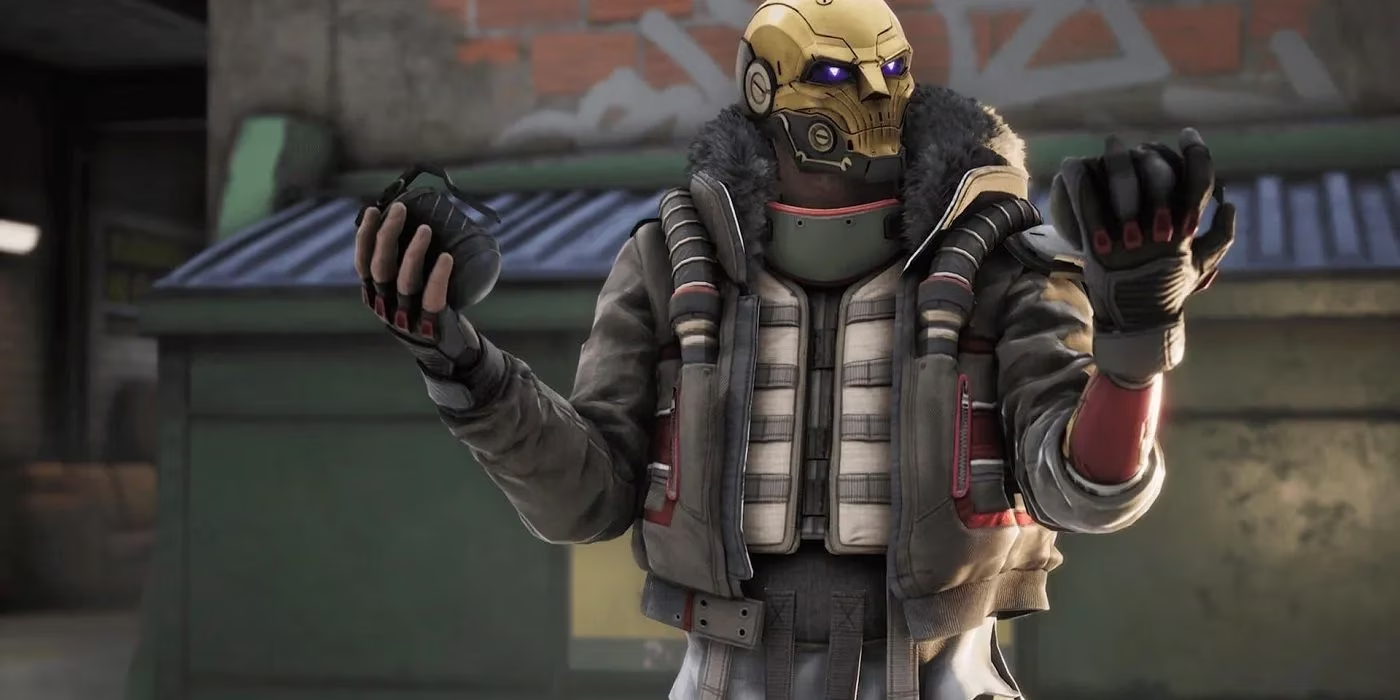
The Rogues themselves formed a toolbox where some tools were polished titanium and others were rusty bottle openers. Scorch could set bullets ablaze and shrug off fire, which opened clever attack paths. Chaac could revive himself and turn lost duels into sudden reversals, assuming he crawled behind cover quickly enough. Trench, by contrast, imported barbed-wire traps that rarely mattered in such a fast game. Since not every Rogue was free during the beta, I wondered whether the meta could drift toward pay-to-win once locked characters settled into serious competition. Visually, however, the roster punched above the usual free-to-play weight, with detailed outfits and expressive faces giving each fighter a premium gloss.
The closed beta offered two four-versus-four modes on maps that looked polished but never really imprinted themselves in my memory. Demolition followed the familiar Search and Destroy shape: one side planted, the other defused. Extraction demanded control of an objective, yet my matches almost always ended in elimination rather than a successful hack. That objective still performed a quiet magic, acting like a gravitational well that pulled every player into the same orbit, so we spent less time wandering empty corridors and more time colliding in dense firefights. It turned what could have been a meandering deathmatch into a compact, urgent loop.
The rough edges were real. Grenades on LB and melee on the D-pad felt like patting my head while rubbing my stomach. Forced cross-play tilted fair fights, and quitters or disconnects could hollow out a team mid-match. Even so, the early blueprint had a clear spark. Looking back from 2026, Rogue Company reads as a quiet precursor for console tactical hero-shooters, proof that the CS:GO-shaped niche existed on consoles and deserved a sharper version of the same dream.