It has been six years since VALORANT exploded onto the tactical shooter scene, bringing with it a radical approach to fair play that sparked a firestorm of debate. In 2020, the gaming community was torn between admiration for Riot Games’ uncompromising stance against cheaters and serious concerns over the kernel-level anti-cheat driver known as Riot Vanguard. Fast forward to 2026, and what was once considered an invasive overreach has become a benchmark for competitive integrity, reshaping how developers tackle cheating in free-to-play titles.

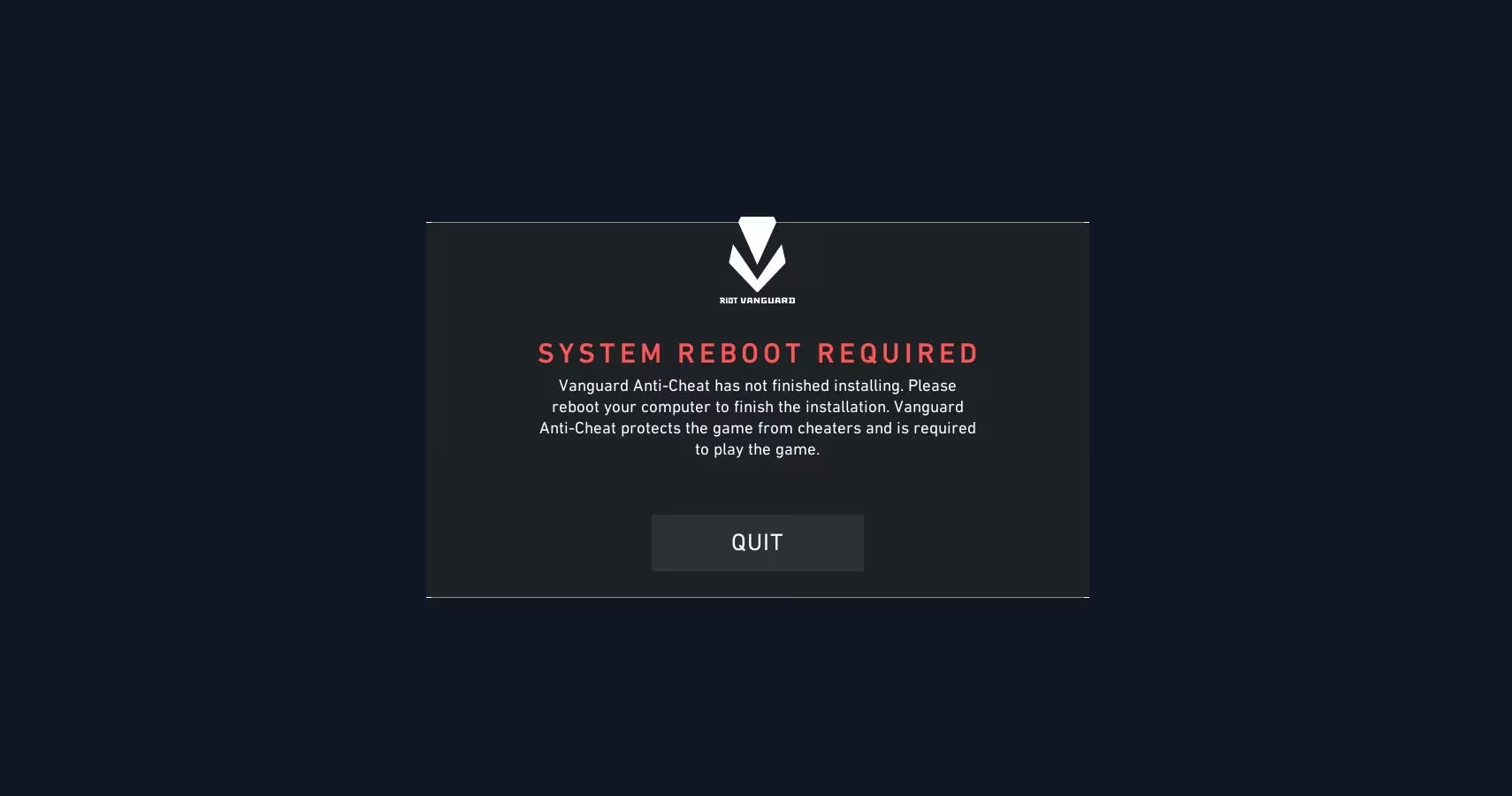
Back in April 2020, as VALORANT’s closed beta rolled out, players quickly realized that installing the game meant accepting a permanent, always-on anti-cheat system. Unlike traditional solutions that only activate when a game launches, Riot Vanguard loaded itself at system boot and ran with kernel-level privileges—the same access level as the operating system itself. Reddit user u/voidox detailed these mechanisms in a viral post, highlighting that the driver operated continuously, even when VALORANT was not running, effectively gaining administrator permissions over the entire machine. The revelation sent shockwaves through privacy-conscious communities. Security researchers warned that any vulnerability in such a deeply embedded component could open the door for malicious exploitation, potentially allowing attackers to hijack systems before a patch could be deployed. Riot Games’ silence on the matter until after the Reddit exposé only fueled the outrage, painting a picture of a developer prioritizing cheat prevention over user consent and transparency.
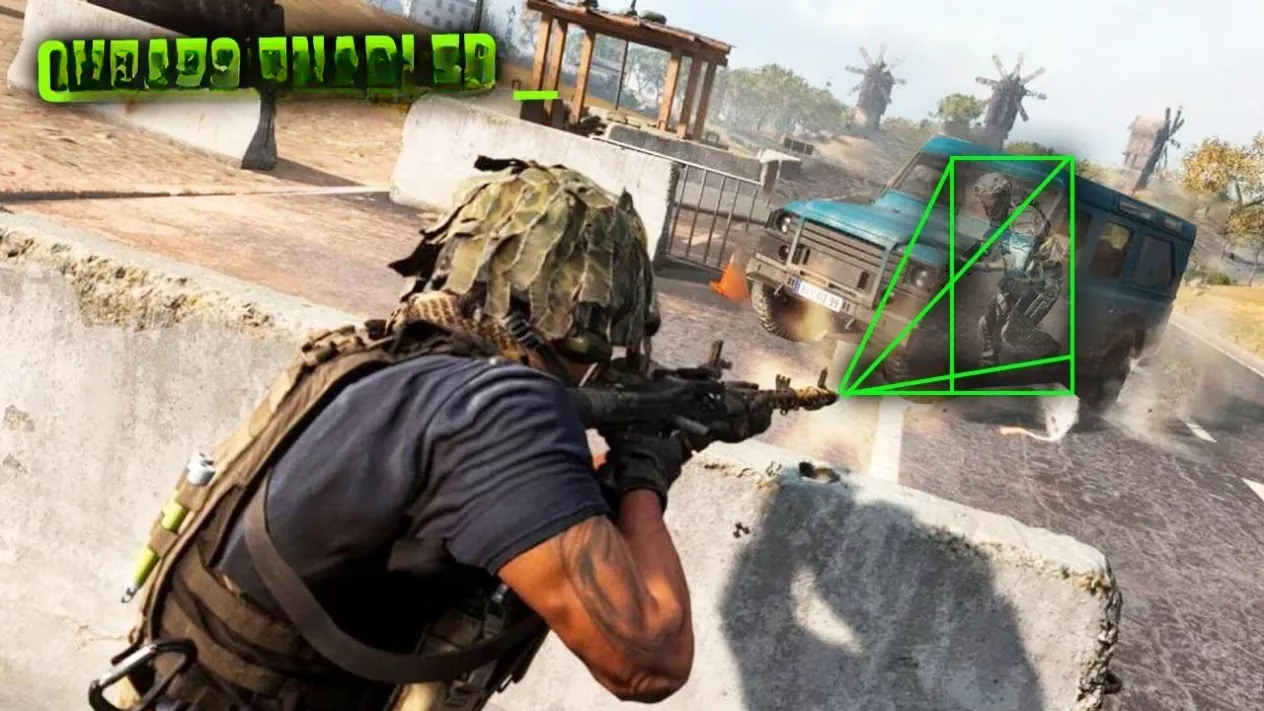
The reasoning behind such an aggressive approach, however, was rooted in a harsh reality. Free-to-play competitive shooters have long been plagued by a revolving door of banned cheaters effortlessly creating new accounts. In 2020, Call of Duty: Warzone served as a textbook example. Despite Infinity Ward’s zero-tolerance announcements and over 50,000 bans, high-profile streamers like TimTheTatman were still encountering blatant aimbotters racking up 49 kills in a single match. The problem was exacerbated by the absence of a strong, proactive anti-cheat; players rightly questioned whether bans were making any meaningful dent, or if hackers were simply running wild. Riot Games understood that VALORANT’s identity as a skill-based esports title would crumble if it replicated the same environment. Years of netcode development meant nothing if skillful plays were repeatedly negated by off-the-shelf hacks.
Ubisoft’s Tom Clancy’s Rainbow Six Siege was another telling case. In early 2020, director Leroy Athanassoff admitted that while Ubisoft would love to transition Siege to a free-to-play model, the move was impossible without first solving rampant cheating and smurfing. The developer feared that removing the initial purchase price would flood the game with bad actors, destroying the experience for dedicated players. This candid statement underscored the dilemma many studios faced: lower barriers to entry meant higher risks of toxicity, and conventional anti-cheat methods were no longer sufficient.
Riot Games could have chosen less invasive paths. Fortnite relied on EasyAntiCheat, which only launched with the game and terminated on exit. CS:GO combined Valve Anti-Cheat with Trust Factor, separating offenders into their own matchmaking ecosystem. Dota 2 simply required 125 games before allowing ranked play. Yet none of these methods targeted the root of the kernel-level cheat problem—cheats that hide beneath the operating system, manipulating game data before it ever reaches the anti-cheat scanner. Riot Vanguard was designed to intercept these threats at the deepest level, making it exceptionally difficult for cheat developers to bypass. The trade-off, however, was that players had to grant this driver a permanent foothold inside their most trusted digital environment.
In the immediate aftermath, the backlash was severe. Tech publications and security experts lambasted the lack of clear communication, while some players declared they would never install such a system regardless of VALORANT’s appeal. Riot’s anti-cheat lead, Paul “RiotArkem” Chamberlain, eventually clarified that Vanguard’s behavior was intentional and unlikely to change. For many, this felt like a betrayal of user trust—why should a video game possess the same level of system access as critical security software? The sentiment was clear: no matter how promising the game, the security concessions were not worth it.
Yet time has a way of shedding new light on controversial decisions. By 2026, Riot Vanguard has undergone multiple iterative overhauls. External security audits, performed by firms like CrowdStrike and Mandiant, have validated the driver’s robustness and found no evidence of exploitable backdoors. Riot established a generous bug bounty program, paying white-hat hackers substantial sums for responsibly disclosing any weakness—a program that has resulted in several critical patches before any in-the-wild exploitation occurred. The driver now offers a more transparent interface, with clear tray icon indicators and an option to temporarily disable it (though the game will refuse to run until re-enabled). These measures did not dismantle Vanguard’s core power, but they did rebuild user confidence. Cheating incidents in VALORANT have remained astonishingly low, with only isolated waves of bans hitting small pockets of the player base. The game has consistently topped viewership charts in esports events, partly because audiences can be confident that incredible shots are the product of skill, not software.
The broader industry took notice. Around 2022, Call of Duty: Warzone introduced its own kernel-level driver, Ricochet, directly citing the success of approaches like Vanguard. Even Ubisoft’s later free-to-play shooter experiments adopted similar persistent anti-cheat layers. The 2020 outrage gave way to a new norm: if a free competitive game wanted to be taken seriously, it needed to protect its memory space at the operating system’s core. While privacy advocates rightfully continue to push for more user control and third-party oversight, the pendulum has swung toward acceptance. Gamers now routinely install games with kernel-level drivers, accepting the calculated risk in exchange for dramatically cleaner lobbies.
The legacy of Riot Vanguard is a paradox. It began as a highly invasive piece of software that was communicated appallingly to end users, sparking fears of surveillance and system compromise. Yet its technical effectiveness forced an industry-wide conversation about what true fair play demands. In 2026, the driver stands as a testament to the idea that competitive integrity sometimes requires uncomfortable compromises—ones that, when handled with evolving transparency and rigorous independent verification, can earn back the trust they initially shattered. The anti-cheat war is far from over, but the battlefield has definitively shifted to the kernel, and Riot Games was the one who drew the hard line that so many others eventually followed.