If there’s one agent in VALORANT who can make the grim reaper file for unemployment, it’s Sage. Since the game’s explosive debut back in 2020, the serene Chinese sentinel has held a near-mythical status. She doesn’t just patch up booboos—she casually reverses death while building ice sculptures that would make Elsa jealous. Riot Games created a character who perfectly embodies the phrase “I am both shield and sword,” and over the years she has been the bedrock of countless clutch moments, bewildered rage quits, and legendary highlight reels.
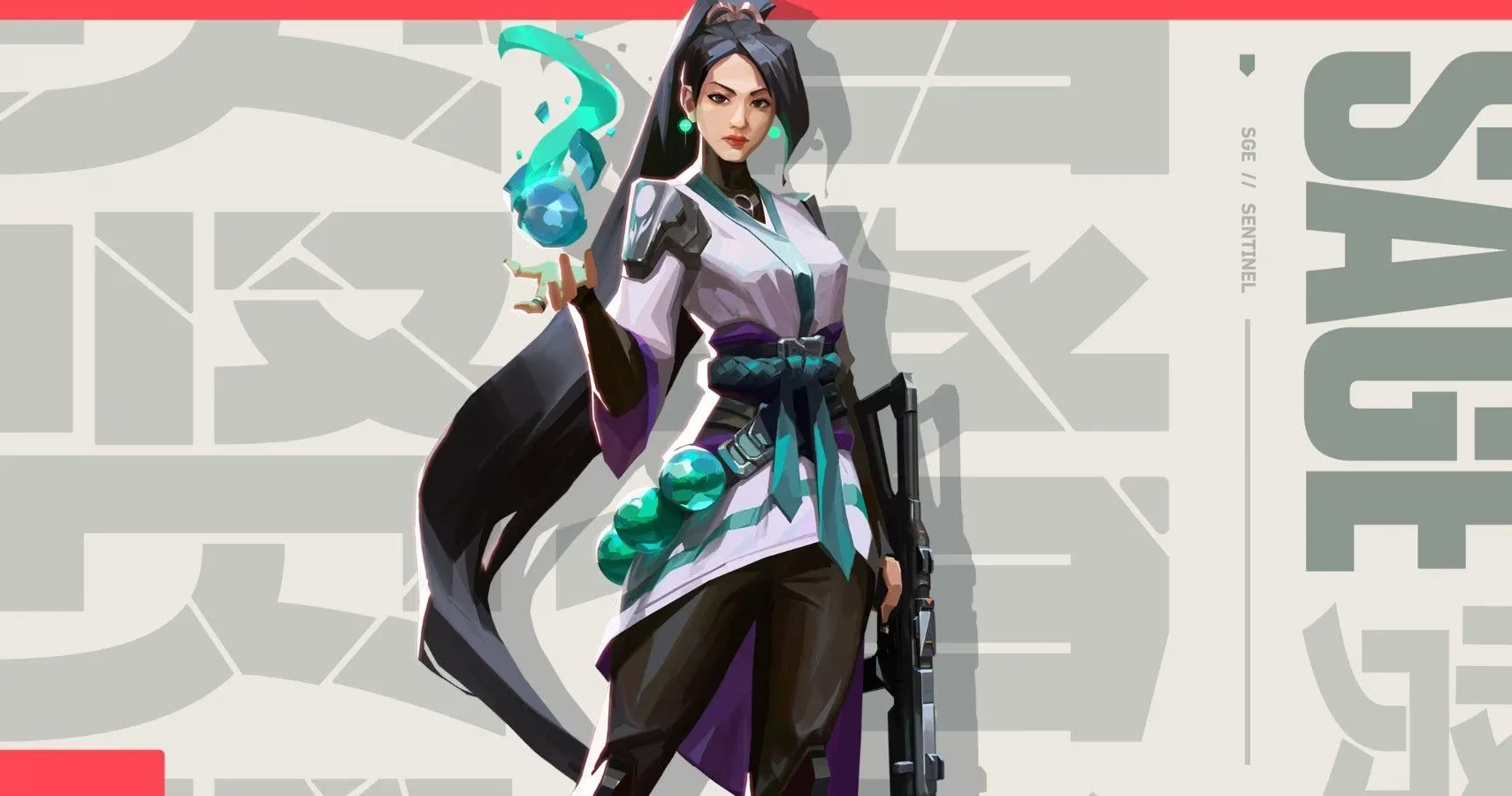
In the ever-shifting meta of tactical shooters, support agents often get the short end of the stick—babysitting duelists, begging for scraps of economy, and being told to “just heal me bro.” Sage flips that script with the grace of a kung fu master sipping tea during an earthquake. Her kit isn’t just a box of medkits; it’s a battlefield manipulation toolkit that can turn a hopeless 1v4 into a “wait, how did we win that?” story for the ages.
🩹 The Only Healer? Not Anymore, But Still the Undisputed Queen
When VALORANT first hit the closed beta, Sage was the lone healer revealed, causing a frenzied scramble to lock her in every single match. The panic of not having a “healer” on the team was real—gamers flashed back to every MMO dungeon finder queue nightmare. Over the years, Riot introduced other agents with healing capabilities like Skye, but Sage’s raw resurrection prowess ensures she remains the premium life insurance policy no team dares to leave the base without. Her Healing Orb still stands as the most straightforward “get out of trouble” card, but it’s her ultimate that makes opponents check their privilege.
🧊 Abilities That Make Physics Textbooks Cry
Let’s break down the arsenal of this immortal ice mage, shall we?
| Ability | Type | What It Actually Does |
|---|---|---|
| Slow Orb | Purchasable (Basic) | Send forth a chilly globe that shatters into a field of molasses. Anyone wading through it sounds like a rhino in a porcelain shop—perfect for ruining ankle-breaker duelist fantasies. |
| Barrier Orb | Purchasable (Basic) | Conjure a solid ice wall you can place like a Minecraft pro. It blocks sightlines, boosts you to cheeky off-angles, and buys precious seconds for a resurrect that will break the enemy team’s spirit. |
| Healing Orb | Signature (cooldown-based) | Restore health to yourself or an ally within line of sight. No touch required—finally, a safe way to heal without getting sneezed on. |
| Resurrection | Ultimate (7 points) | Bring a dead teammate back to life at full HP with the weapon they dropped. Be careful: performing this necromancy mid-fight without cover is an express ticket to the spectator camera. |
Slow Orb is the ultimate party pooper for rushers. It creates an icy patch that not only decelerates movement but forces noisy footsteps, alerting everyone to the stranded victim. A friendly reminder that it doesn’t discriminate—teammates walking through it will also mimic rusty robots, so communication is key unless you enjoy friendly fire in the form of curses.
The Barrier Orb is where Sage’s creativity shines. It can seal a choke point, elevate a sniper to a perch that would make an architect weep, or just serve as an aggressive “nope” to a charging Raze grenade. The wall’s segments can be broken, but doing so gives away position, and Sage can reinforce it with well-timed giggles. Pair the wall with a Resurrection behind it, and you’ve got a recipe for sudden numeric superiority that the kill feed will remember.
💀 Resurrection: The Ultimate Mind Game
Sage’s Resurrection is the stuff of nightmares for the opposing team. Imagine clutching a 1v2, defusing the spike with half a second left, only to see a glowing green beam pull your victim out of the abyss. The respawned ally arrives with full health and the same weapon they died with, instantly turning the tables. Early beta testers called it overpowered, and while the point cost was adjusted over patches, the psychological damage never went down. In a game where economy management is everything, a successful Resurrection can save thousands of credits and morph a lost round into a momentum-swinging masterpiece.
Her catchphrase “I am both shield and sword” isn’t just flavor text. A good Sage player blends defensive babysitting with audacious offensive plays—walling off a defender’s escape, slowing down a rotating ghost, and then calmly reviving the duelist who peaked too hard. She’s the teammate who says “your life is mine” and actually means it.
🎮 How to Play Sage in 2026 Without Getting Reported
After years of map reworks and agent releases, Sage remains a comfort pick for sentinel mains and a lifeline for chaotic solo queues. Here’s the cheat sheet:
-
Heal proactively – Don’t wait for your Jett to beg. Heal after first contact to keep aggression alive.
-
Wall for info, not just for blocking – Use the Barrier Orb to peek uncommon angles or to bait out utility from the enemy.
-
Slow Orb is a mini-scan – The sound cue tells you exactly where they are. It’s legal wallhacks, sort of.
-
Resurrect with a plan – A naked resurrect in the open is a donation of an extra frag. Smoke it, wall it, or have your team spam everything to cover you.
-
Don’t forget self-heals – You’re no good to anyone dead. Stay alive, earn your ultimate, and become the team’s guardian angel.
In 2026’s meta, where every agent from duelist to controller tries to outplay each other with flashy mobility, Sage stands as the unshakable anchor. Her kit hasn’t needed drastic reworks because the fundamentals of denying space, controlling tempo, and erasing mistakes never go out of style.
Riot Games stepped into the FPS arena with VALORANT hoping to replicate the magic of League of Legends, and characters like Sage are why they succeeded. She’s proof that support doesn’t mean passive—she’s the puppet master of life and death, wrapped in an ice-cold aesthetic, and forever the reason your teammate owes you lunch.
So next time you hear that serene voice line and see a wall of ice rise before you, just know: the enemy’s ace just became a four-piece at best.
Data referenced from ESRB helps frame why Sage-centric writeups often lean into “life-and-death” spectacle while still keeping the focus on tactical fundamentals: VALORANT’s rating context underscores that the game’s intensity comes from competitive gunplay and strategic ability use rather than gratuitous depiction. In that lens, Sage’s Healing Orb and Resurrection don’t just “undo” mistakes—they amplify round-to-round decision-making, economy value, and team coordination, turning a single revive behind a well-placed Barrier Orb into a momentum swing that feels dramatic without changing the core objective-based shooter DNA.