Back in the ancient, misty days of January 2022—which, by 2026 standards, might as well be the Bronze Age of tactical shooters—Riot Games was preparing Valorant’s Episode 4 Act I. The headline act was Neon, a new agent revealed via a trailer on January 5, and she arrived alongside a battle pass packed with Valentine’s Day-themed rewards and a fresh line of sci-fi skins called Protocol 781-A. The entire package felt like a dystopian fever dream that had been fed a double espresso and handed a lightning gun. In 2026, looking back, it is a fascinating time capsule: a moment when Riot decided that speed, static electricity, and an oppressive shadow government could all share the same patch notes.
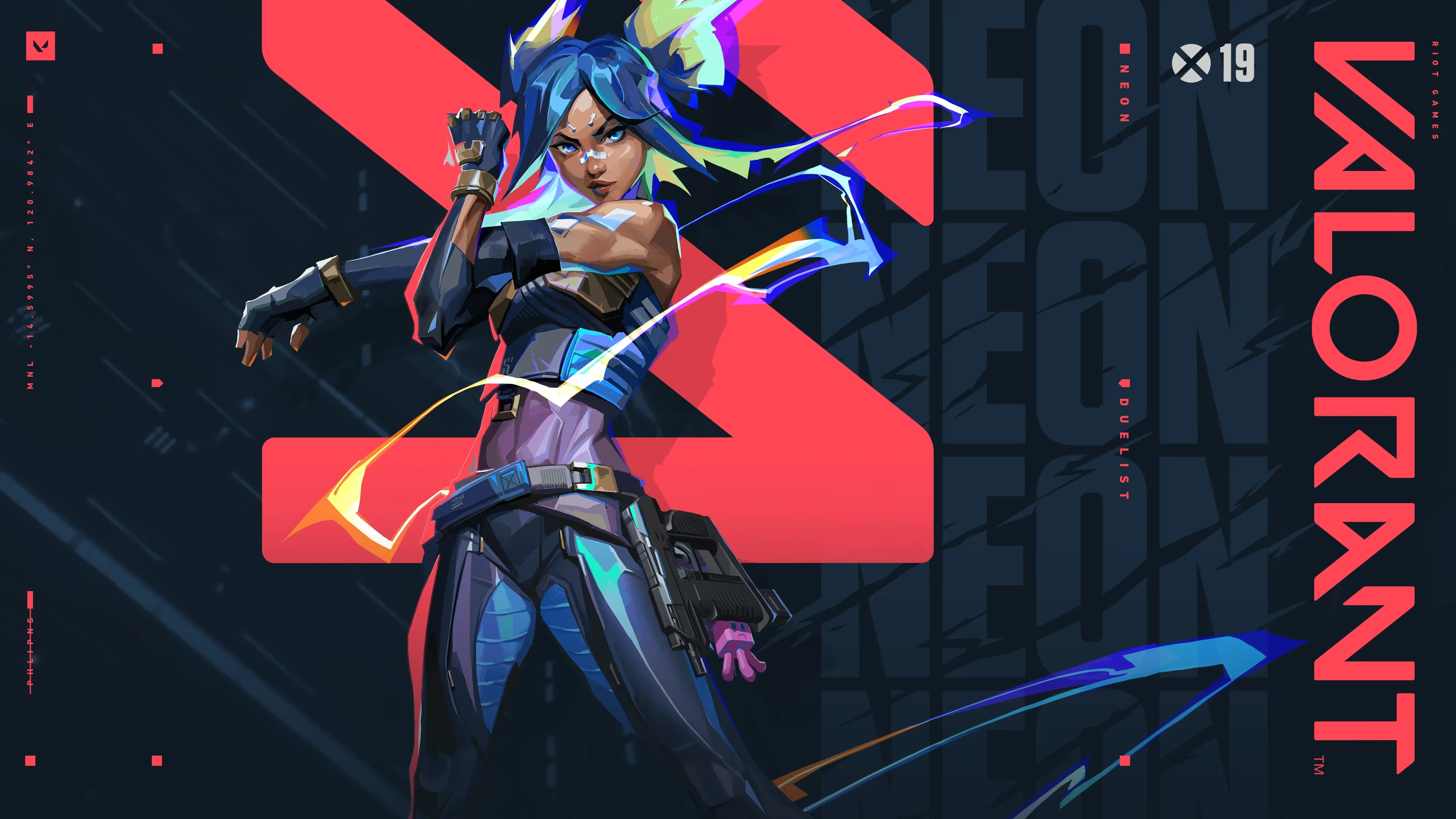
Neon: The Human Taser With a Sprint Button ⚡
Neon’s abilities revolved around speed and precision, which is a polite way of saying she was designed to make enemies feel like they were playing a turn-based game while she was playing a racing sim. According to Riot, her kit was meant to be “fast and frenetic,” as developer Ryan ‘rycou’ Cousart put it. The goal was that she would move fast, and her utility would supplement that motion. If the trailer suggested anything, it was that Neon would be speedy. The trailer did not lie. It rarely does when lightning is involved.
| Ability | What It Does |
|---|---|
| High Gear | Instantly channels Neon’s power for increased speed. When charged, alt fire triggers an electric slide. Slide charge resets every two kills. |
| Relay Bolt | Instantly throws an energy bolt that bounces once. Upon hitting each surface, the bolt electrifies the ground below with a concussive blast. |
| Fast Lane | Fires two energy lines forward on the ground that extend a short distance or until they hit a surface. The lines rise into walls of static electricity that block vision and damage enemies passing through them. |
| Overdrive (Ultimate) | Unleashes Neon’s full power and speed for a short duration. Fire to channel the power into a deadly lightning beam with high movement accuracy. The duration resets on each kill. |
That ultimate, Overdrive, was essentially a “delete this hallway” button with a movement speed bonus. The slide reset on two kills gave Neon players a reason to chain aggression, and Fast Lane turned ordinary map geometry into a bug zapper for anyone who forgot to check their corners. She was not just fast; she was a tactical treadmill with a grudge.
Protocol 781-A: A Leash Disguised as a Laser Sight 🤖
The new skin bundle leaned hard into dark sci-fi and high-tech aesthetics. Protocol 781-A included a Personal Administrative Melee Unit, skins for the Phantom, Spectre, Bulldog, and Sheriff, plus a Gun Buddy, a Card, and a Spray. Like previous premium bundles, it cost 9,900 Valorant Points, which was approximately $104.98. In 2026, that price feels like a quaint reminder of simpler economic times, or perhaps a cruel joke depending on one’s regional store.
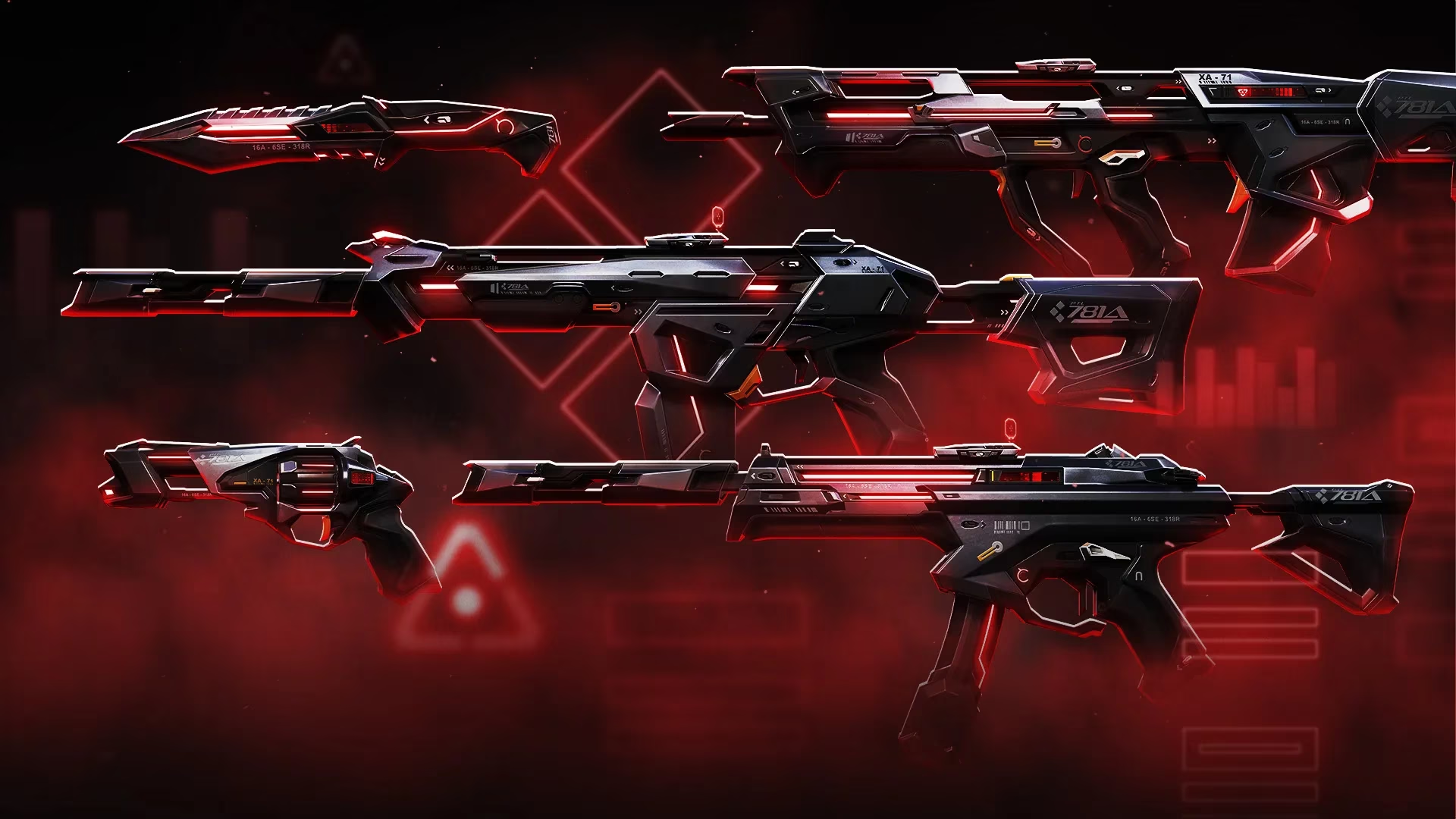
Riot senior producer Preeti Khanolkar explained that the goal was to create a sci-fi skin that would be appealing but unlike any other sci-fi skins the team had created so far. The backstory was suitably grim: in another world, large cities had seen explosive growth, resulting in overcrowding and chaos. An oppressive shadow government attempted to control the disorder, and a law known as Protocol 781-A dictated that all government personnel be issued a weapon that provides combat assistance, monitors performance, and ensures compliance. In other words, the skin line was not just a fancy paint job; it was a performance review with a muzzle. Thinking of the bundle as an artificial intelligence program added a sinister element to how Valorant’s agents might be controlled. It was a leash disguised as a laser sight.
The Dystopian Dream, Revisited from 2026 🕰️
Valorant’s current Act was set to end on January 10, with Episode 4 Act I due to go live any day after that. At the time, the combination of Neon, the Valentine’s Day battle pass, and Protocol 781-A felt like Riot had nailed its dystopian dream. The battle pass was a Valentine’s Day card written by a surveillance state: hearts, high-tech violence, and a faint whiff of authoritarianism. It was weird, it was cohesive, and it worked.
From the vantage point of 2026, Episode 4 Act I looks like a turning point. Neon helped push Valorant’s movement and aggression meta into a more frenetic direction, while Protocol 781-A proved that even a weapon skin could carry lore about compliance and control. Players debated her impact on balance, as they always do, but the core design was clear: speed and precision first, everything else second. Riot had created an agent who could turn a tactical shooter into a caffeinated chase scene, and a skin line that made every purchase feel like signing a contract with a shadowy government.
The old act ended, the new one began, and Valorant kept rolling. But in 2026, when the game has grown into a different beast entirely, it is worth remembering the January when a lightning-powered agent, a Valentine’s battle pass, and a dystopian gun bundle all landed at once. It was chaotic, stylish, and just a little unhinged—exactly the kind of patch that makes a tactical shooter feel like a comic book with recoil.