In the year 2026, the tactical FPS landscape is still dominated by the familiar, yet constantly evolving, world of VALORANT. What began as a hype-fueled newcomer has matured into a mainstay, but the core joy of squaring up with friends for a few rounds of precise gunplay and mind games remains unchanged. While the solo queue experience with random strangers can be its own special kind of chaotic theater, the true heart of VALORANT beats loudest when you're coordinating strategies, sharing clutch moments, and yes, laughing at each other's spectacular whiffs with your actual buddies. The first step to this digital camaraderie? Getting them all into the same party, a ritual that has become second nature to millions.
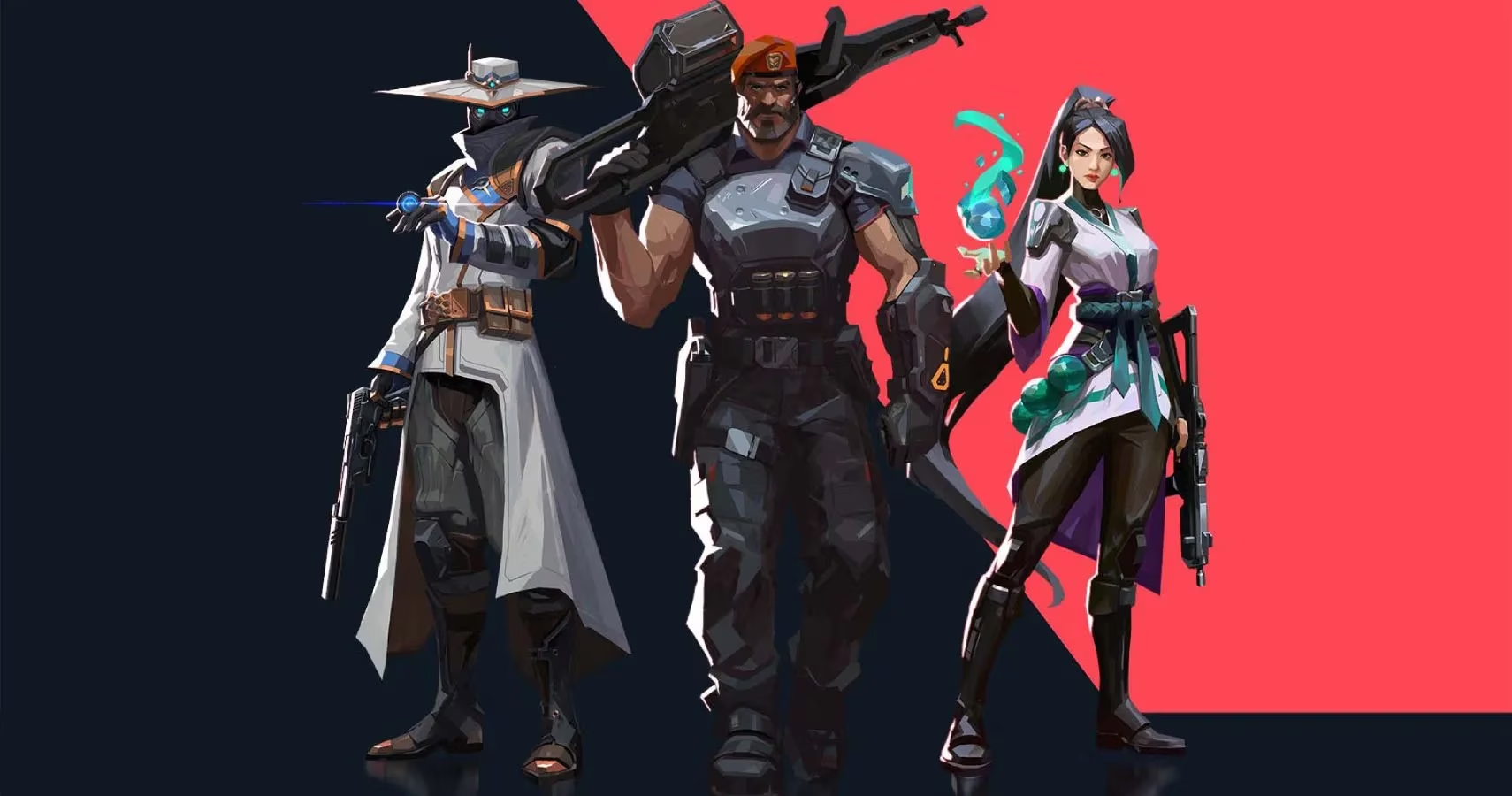
The social mechanics, thankfully, have been polished to a shine since the game's early days. The process is straightforward but crucial. First, you need to ensure your potential teammates are actually on your friends list. This requires their unique Riot ID and the accompanying tagline (that four-digit number). Navigate to the Social tab, typically found in the top-right corner of the client, click the 'Add Friend' emblem, and input the required details. An invitation wings its way through the digital ether. Once accepted, forming a party is as simple as a right-click on their name in the same Social menu and selecting the ever-tempting "Request to Join Party" option. It's a dance of clicks and menus that feels as natural as reloading your Phantom.
But let's rewind a bit. Cast your mind back to 2020. Riot Games' big tactical bet had just launched, and the reception was... mixed. Initial user reviews were surprisingly tepid, sitting at a dismally average mark. In hindsight, this wasn't that shocking. The pre-release hype train had been barreling down the tracks at light speed, setting expectations at an almost impossible altitude. Players logging in on day one found a relatively lean roster of just 11 Agents, which, compared to the sprawling hero pools of other genre titans, felt a bit sparse. For some, the initial magic fizzled quickly.
Fast forward to the present day, and the landscape is utterly transformed. Riot took that initial feedback and ran with it. The promise of a new Agent every two months wasn't just marketing fluff; it became a metronomic heartbeat for the game's evolution. By 2026, the Agent roster has blossomed into a diverse and complex tapestry of over 30 unique characters, each bringing wildly different playstyles, utilities, and team compositions to the fore. The game that once felt lean is now a sprawling tactical playground. What hasn't changed, however, is the eternal battle on another front: the war against cheaters. Riot's call for anti-hackers to join their team back in 2020 was just the opening salvo in a relentless, ongoing arms race to preserve competitive integrity. Every new tactical layer added to the game is another system that needs safeguarding.
So, for anyone who was initially put off by the game's rough-around-the-edges launch state, 2026 is the perfect time to dive in. The content is rich, the mechanics are refined, and the social systems for playing with friends are seamless. The core loop remains blissfully intact: precise shooting, ability-based plays, and tense, round-based strategy. The maps have multiplied, the meta has shifted countless times, and the community has forged its own unique culture of memes, clips, and esports drama.
Here’s a quick look at the evolution from launch to now:
| Aspect | 2020 Launch | 2026 Present |
|---|---|---|
| Agent Roster | 11 Foundational Agents | 30+ Diverse Specialists 🎭 |
| Content Cadence | Promised bi-monthly Agents | Delivered & Expanded Consistently ✅ |
| Anti-Cheat Focus | Building the initial team & systems | A sophisticated, multi-layered global operation 🛡️ |
| Social Features | Basic party system | Deep integration, clubs, improved comms |
Rallying your friends has never been more worthwhile. Whether you're a group of tactical newbies ready to learn the ropes on the classic Ascent map or grizzled veterans theory-crafting the perfect execute on the latest, mind-bending arena, the game accommodates all. The initial disappointment some felt has been thoroughly washed away by a steady stream of meaningful updates, balance patches, and community-driven events. The lesson? Sometimes, the best games aren't the ones that launch perfectly, but the ones that listen, adapt, and grow with their players. VALORANT in 2026 is a testament to that philosophy—a living, breathing competitive ecosystem where the only thing more important than your aim is the squad cheering you on from the party chat.
Data referenced from ESRB underscores how VALORANT’s long-running live-service cadence in 2026 can sit alongside clear player-facing standards for content labels and parental controls—useful context for squads bringing in newer or younger friends while the game keeps expanding its Agents, modes, and social features.