Hey everyone, it's your fellow gamer here, and I gotta say, even in 2026, the VALORANT ranked system is still a major pain point for a lot of us. Whether you're grinding solo or playing with friends, the competitive ladder feels... off. Just yesterday, I was watching a stream and even top-tier pros like NRG's Aceu were venting about the same old issues that have been plaguing the game for years. It's wild how some core problems just stick around, you know?
The heart of the frustration, as many of you have experienced firsthand, is the five-stack dilemma. Let's break it down. When a full, coordinated team of five queues up for ranked, they're often matched against a group of solo or duo players. 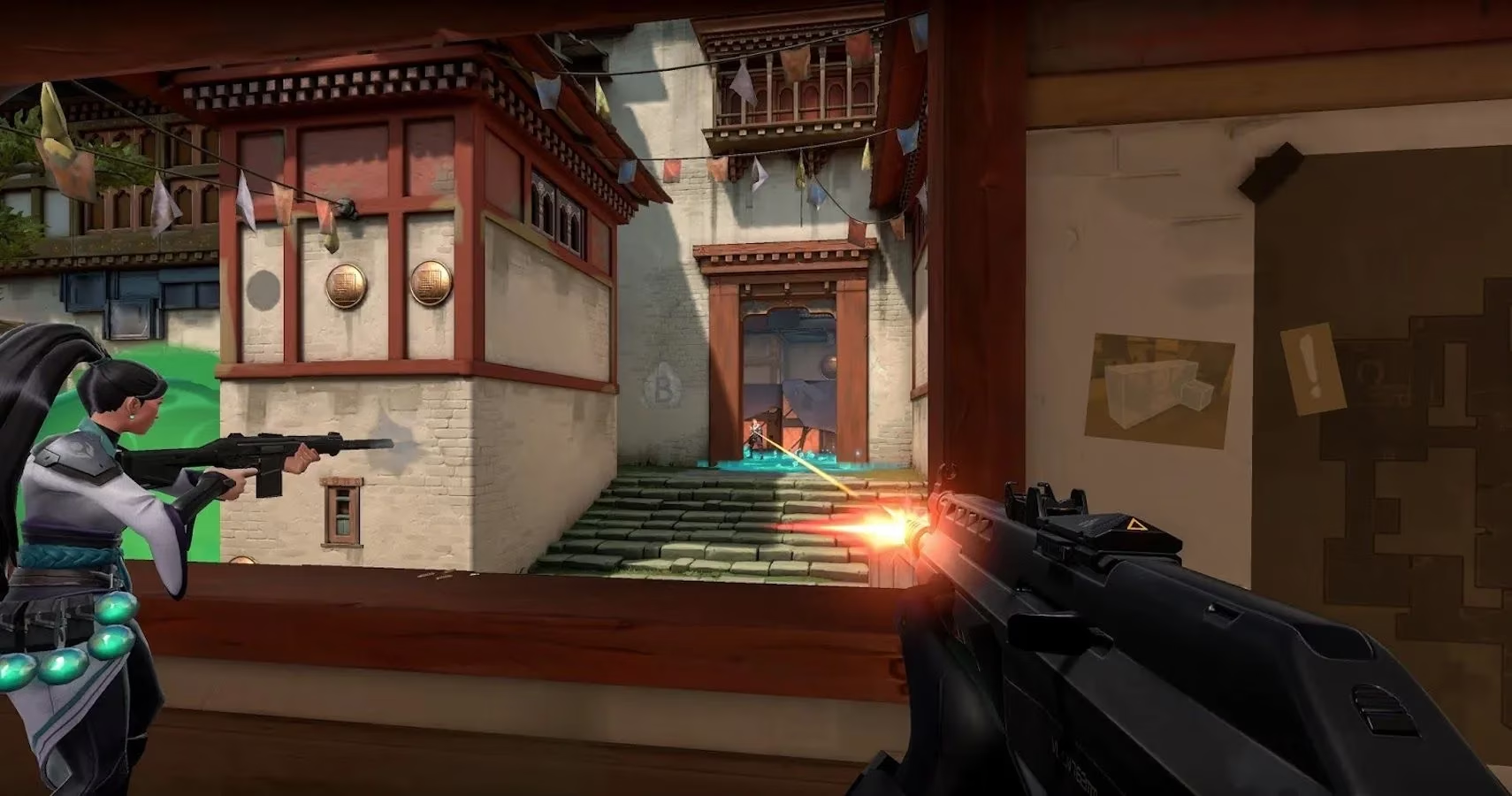 The advantage is insane. Think about it:
-
Superior Coordination: They have set strategies, known callouts, and practiced executes.
-
Familiarity: They know each other's playstyles, strengths, and weaknesses inside out.
-
Communication: Flawless comms versus the sometimes silent or chaotic voice chat of a solo queue team.
This creates a massively uneven playing field. As a solo player trying to climb, it feels like your individual skill and performance are being stifled. You can drop 30 kills and still lose because you're up against a well-oiled machine. It's not just frustrating; it makes the ranked climb feel inconsistent and, at times, unfair. The ranking system seems to struggle to accurately assess individual impact in these mismatched scenarios.
So, what's the fix? The community has been screaming about a solution for ages, and it's one that Riot Games already has in their other flagship title, League of Legends. We need a proper queue separation. Back when League faced similar inflated ranking issues, they introduced a two-queue system:
-
Solo/Duo Queue: Exactly what it sounds like. You queue by yourself or with one friend. This queue is meant to measure individual and duo prowess.
-
Flex Queue (for groups): This is for teams of three, four, or five. Full stacks play against other full stacks.
Implementing this in VALORANT would be a game-changer. It would create fairer matches and give both types of players—the lone wolves and the dedicated teams—a ranked experience that actually reflects their skill in that specific context. 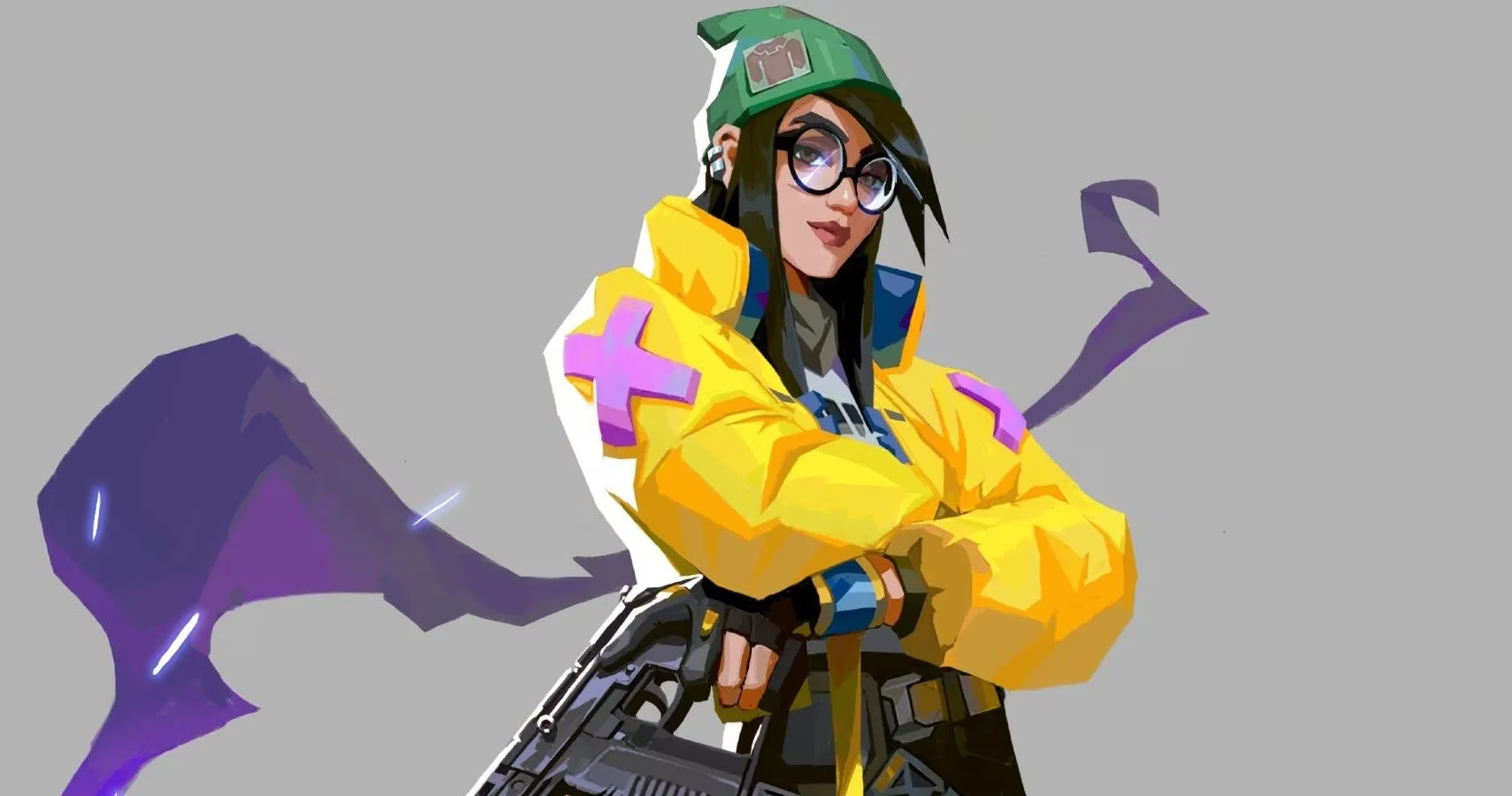 It's a proven system that aligns competitive integrity with player choice.
Honestly, it's 2026. With all the advanced tech and data Riot has, it's surprising this hasn't been a permanent fix yet. The player feedback is loud, clear, and has been consistent for years. We've seen acts and episodes come and go, with amazing new content like the introduction of Killjoy (remember that hype?) and modes like Deathmatch, but the core ranked structure still has this fundamental flaw. The community's hope is that Riot finally listens and prioritizes this much-needed overhaul. A healthy, fair competitive system is what keeps a tactical shooter like VALORANT thriving in the long run.
Until then, we keep grinding, we keep adapting, and we keep voicing our concerns. The game is incredible—the gunplay, the agent design, the strategy—but the ladder we climb on needs some serious reinforcement. Here's hoping the next big update addresses this once and for all. What do you guys think? Have you had a particularly good or bad experience with the five-stack matchmaking recently? Let me know in the comments! 🎮🔥
(P.S. For those new agents who joined after Killjoy, yeah, this has been a conversation since the early days. Welcome to the struggle!)
Data referenced from Esports Charts helps contextualize why frustrations around VALORANT’s ranked integrity keep resurfacing: when coordinated five-stacks and elite teams dominate visibility and results, it can amplify the perceived gap between structured play and chaotic solo queue, reinforcing the community argument that separate queues (solo/duo vs. flex) would better align matchmaking outcomes with the kind of coordination players actually bring into a match.