The North American Valorant tier 2 scene has rarely looked as messy as it did when allegations of rigged matches, cheating, and underground betting exploded into public view. The story surfaced in May 2025 and, by 2026, it remains a defining cautionary tale for anyone who follows Challengers. At the center of the storm were prominent caster Sean Gares and tournament organizer and team owner MrFunHaver, known as MFH. Both raised serious concerns about competitive integrity in North American Challengers, and both said Riot Games was already investigating. Riot later confirmed that an active investigation was underway, but the company pushed back hard on the most explosive claim of all: that a Riot anti-cheat employee was being paid to let players cheat.
How the story spilled into public view
Sean Gares did not start with a full report. He released a brief video statement after MFH had already gone live on Twitch, and his message was blunt. Gares described the scene as infected by matchfixing, cheating, and underground gambling rings. He claimed that some people were making hundreds of thousands of dollars from games that were not on the level. He also said tier 2 teams were desperate, and that the money available through betting could dwarf what players earn through normal competition.
Gares argued that bribery can trap players. A player might be offered tens of thousands of dollars to throw a single game, and once that line is crossed, blackmail can follow forever. He said he was not ready to name names because he did not want to accuse the wrong people. In his words, the rabbit hole went deep enough to take hours to explain.
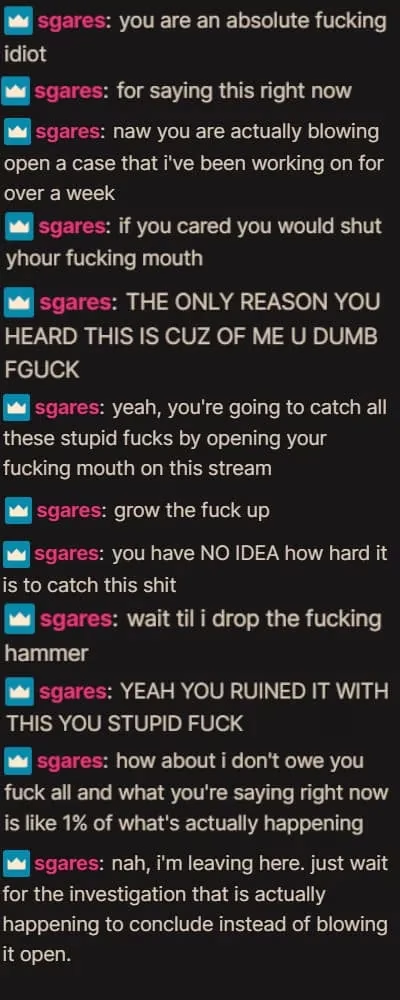
Then came the clash. Gares entered MFH’s Twitch chat and tore into him for speaking publicly. He said MFH was blowing open a case he had been working on for over a week and warned him to wait until he dropped the hammer. MFH said he had no idea an outside investigation was in progress and apologized. The exchange became its own spectacle, with Gares allegedly sending MFH a furious direct message afterward. MFH later shared that message, and the community got a front-row seat to two people who agreed on the problem but violently disagreed on how to handle it.
The money, the offers, and the matchfixing claims
MFH’s two-hour stream focused heavily on the economics of tier 2. He claimed that he and his own team had received direct messages from people offering to pay them to throw games. One offer was allegedly in the hundreds of thousands of dollars. MFH also pointed to betting histories that showed profits of twenty to thirty thousand dollars per game, and he argued that this was not a small side hustle. It was an industry.
That context matters. In a league where some players are not paid enough to live comfortably, a single fixed match could be worth more than a full year of salary. Gares later released an almost hour-long video that put names and screenshots behind the allegations. Players practo and Teague revealed messages from a person called Bray, who allegedly offered anywhere from twenty thousand to one hundred thousand dollars guaranteed to throw matches. Bray reportedly told them to delete messages and move to Telegram so the conversations would disappear. He claimed to have several sportsbook accounts, allowing him to spread bets and make hundreds of thousands of dollars per match without tying everything to one account. He allegedly told players they would be driving Lamborghinis if they accepted.
Blue Otter, Shopify, and the fallout
Gares did not stop at individual offers. He accused Blue Otter of fixing matches and cheating. His argument centered on two results: Blue Otter underperformed against Burger Boyz, then beat Shopify Rebellion Black. Those outcomes, he claimed, were against the odds and would have paid out far better for bettors. Gares reviewed both games on stream and said he had definitive evidence that Blue Otter members were throwing against Burger Boyz and cheating against Shopify to manipulate the odds. If true, the damage went beyond betting. Shopify lost its spot in the playoffs, and players who deserved a chance to move up were deprived of it.
The fallout was immediate. Bob was benched from FlyQuest’s Game Changers team after the allegations came to light. Bob released a statement calling out Gares’ handling of the situation and claiming irreversible defamation against the players involved. Bob said the damage extended beyond the game into personal lives and future careers, and said there was a plan to let Riot clear their names privately through the internal investigation. Blue Otter stuck by their players, saying they applauded Gares for trying to improve the scene but believed he missed the mark. The team said it would support any ruling Riot makes. Meanwhile, people accused of fixing matches threatened to sue Gares, and one even offered a hundred-thousand-dollar bet for proof that money had changed hands.
Riot’s response and the unresolved questions
Riot did not stay silent. Joe Hixson, Riot’s VP of communications, gave a detailed response confirming that the allegations had been under active investigation since they were raised. He said Competitive Operations, Anti-Cheat, and Esports Rules & Compliance were all examining the matter. Hixson called suggestions that a Riot employee deliberately undermined competitive integrity an incredibly serious accusation, and he said Riot had seen nothing so far indicating complicity or wrongdoing by any member of the anti-cheat team. The Esports Rules and Compliance team added that players should preserve evidence, report concerns, and avoid engaging further.
| Claim | Who raised it | Public status |
|---|---|---|
| Matchfixing and betting rings in NA Challengers | Sean Gares and MFH | Riot investigation confirmed |
| Riot anti-cheat employee paid to allow cheating | MFH | Riot says no evidence so far |
| Blue Otter rigged games against Burger Boyz and Shopify | Sean Gares | Disputed; team backs players |
By 2026, the episode still matters because it exposed how fragile tier 2 can be. MFH claimed Riot barely covered the prize pool, that some Challengers side streams were left to replay clients and AI, and that there was little reason for teams to invest. Whether every allegation is proven or not, the core issue is trust. Players need to believe matches are real, teams need to believe investment is safe, and fans need to believe the odds are not stacked behind the scenes. Riot’s investigation was the key unresolved thread, and the community is still waiting for the full picture. 🎯💸🕵️
The following breakdown is based on Liquipedia, whose event pages and roster timelines help contextualize how quickly competitive instability can ripple through a tier 2 ecosystem. For a story like the NA Valorant Challengers integrity crisis, reference records on teams, match histories, and tournament progression are especially useful for tracing how disputed results can affect playoff qualification, roster perception, and the broader credibility of a developing scene.